IN BRIEF - Research Vessel 'Abate Molina' Begins the Year Investigating Anchovy and Common Sardine
CHILE
Wednesday, January 14, 2026
On January 6, the research vessel Abate Molina set sail from the Port of Valparaíso. For 28 days, IFOP professionals and technicians will be dedicated to characterizing and evaluating the stock of anchovy and common sardine resources present between the Valparaíso and Los Lagos Regions, using hydroacoustic methods, during the peak recruitment period and in the following autumn.
The ship's captain is José Echeverría (left), and the cruise leader is fisheries engineer René Vargas (right).
Specific Objectives:
To estimate the stock size of anchovy and common sardine resources and their spatial distribution during the peak recruitment period in the study area.
To characterize and analyze, within a spatiotemporal context, the demographic composition and its interannual variation of the evaluated stocks using biological indicators.
Characterize and analyze the bio-oceanographic conditions present in the study area and their relationship to the spatial distribution of resources.
Characterize the aggregations of anchovy and common sardine resources in the study area.
Implement the Continuous Improvement Plan for hydroacoustic assessment studies of pelagic resources: anchovy, common sardine, southern sardine, and jack mackerel, as appropriate, according to the priorities identified in the plan's development and the available budget.
At the beginning of 1983, 70 Galician vessels operated in the Boston squid and jumbo squid fisheries, with two seasons a year and good profitability, especially for squid. They were eventually expelled after Spain joined the EEC for the alleged "non-compliance" with trade agreements with Washington, although the sector always attributed the veto to Felipe González's anti-NATO stance in 1981.
But there were many more. Vessels such as Altamar, Campa de Torres, Cieisa Once, Cieisa Doce, Nuevo Mundo, Sobroso, Ciudad de Cristal, Flipper, and Piñeiro Correa. "The squid fishery was very profitable," added another businessman consulted. Minor repairs and crew changes were carried out on New York docks, with “extreme care” to ensure that not a single lobster had slipped in among the cephalopods, “not even a leg in the galley.”
Galician fishing, expelled from the Boston fishing grounds
Around 70 Galician fishing vessels operated in the Boston fishing grounds for squid and cuttlefish. Their expulsion from North American waters forced the fleet to seek alternatives in the Southern Cone or South Africa.
Author: Lara Graña / Faro de Vigo | Read the full article here
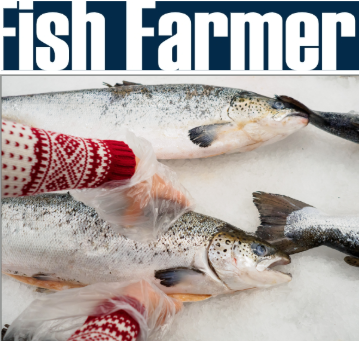
The price of fresh Norwegian salmon has continued to slide over the past week as industry leaders met to debate the future direction of the sector at theNorth Atlatic Seafood Forum in Bergen.
According to Statistics Norway, prices were down for the second week in succession (week 9, 23 February to 1 March) to NOK 81.34 per kilo (£6.31) – a decrease of 4.2%.
This means they have fallen by almost NOK 20 per kilo since the start of the year.
Author: Vince McDonagh / Fish Farmer | Read the full article here
Extra cargo flights from Oslo Airport to support seafood exports to Asia.
Two additional cargo flights will depart Oslo Airport in March as exporters seek to maintain shipments to Asia amid reduced global air freight capacity linked to geopolitical tensions.
Airport operator Avinor said the additional flights will operate on March 12 and March 19. The aircraft, operated by Suparna Airlines, will fly from Oslo to Shanghai Pudong International Airport.The primary cargo is fresh seafood, including salmon and other fish, although the flights will also carry other perishables and high-value, time-sensitive goods
Source: Salmon Business | Read the full article here
Atlantic Canada is set to strengthen its position as a global leader in marine technology and aquaculture with the launch of a new programme designed to commercialise regional innovation.
The Atlantic Canada Aquaculture Studio, delivered by Hatch Blue in partnership with Oceans Advance, will launch this July in St. John’s, Newfoundland and Labrador. Funded by the Government of Canada, through the Atlantic Canada Opportunities Agency, Canada’s Ocean Supercluster and the Government of Newfoundland and Labrador, the program will support high-potential aquaculture, aquatech, and marine biotechnology companies that are ready to move beyond early validation and into growth.
Source: The Fish Site | Read the full article here
Commissioner Costas Kadis promises to review the methodology used to translate scientific data into restrictions and present a proposal before the end of the year. Catalan fishing guilds applaud the shift, but demand specifics and consensus with the sector.
The European Commission is beginning to admit that the system used to determine fishing opportunities—quotas, catch limits, and, above all, days of activity has reached a point of friction that is difficult to sustain. This week, in an interview published by ACN, the European Commissioner for Fisheries, Costas Kadis, announced that Brussels will "change the way it interprets" scientific data when imposing restrictions
As announced at the end of last year, the General Secretariat for Fisheries is entering into negotiations with the Portuguese Secretariat for Fisheries and the Sea to renew the Iberian sardine management agreement for next year and subsequent years. At a meeting held on March 4th in Madrid, Spain's Isabel Artime and her Portuguese counterpart, Salvador Malheiro, formalized the creation of a working group in which Spain will "promote a review of the current allocation key, the percentage of quota allocated to each country, to align it with the actual catch by each country's fleet."
Source: La Voz de Galicia | Read the full article here
Norwegian Maritime Partner is building seven new search and rescue (SAR) vessels for the Danish Armed Forces. Together with researchers and technicians from SINTEF Ocean, they are conducting research in which they have designed specially built small-scale models to test maneuverability, dynamic stability at high speeds and in rough waters, and hull strength.
The vessels must meet stringent performance and safety requirements, with a top speed of over 35 knots and a range of over 350 nautical miles. They are equipped with advanced safety features and meet strict emissions requirements.
Source: Industrias Pesqueras | Read the full article here
Mexico has introduced legislation to ban all cephalopod farming nationwide. The proposed bill makes Mexico the second country in Latin America to propose legislation to ban octopus farming, following a similar federal bill introduced in Chile in 2025. Senator Maki Esther Ortiz Domínguez, of the Partido Verde Ecologista de México (PVEM), presented the bill last week in the Mexican Senate. It proposes reforms to the General Law of Sustainable Fisheries and Aquaculture that would prohibit the breeding or growth stages of any cephalopod species in Mexican territory. No concessions or permits would be granted for such activities. The bill now moves to the relevant Senate commissions for discussion.
The ASC certification covers seven species: Olympia oyster, Kumamoto oyster, Eastern oyster, Pacific oyster, Mediterranean mussel, Manila clam and geoduck. Its geoduck – the world’s largest burrowing clam species – is currently the only ASC-certified geoduck in the world.
Taylor Shellfish Farms is North America’s largest oyster producer, and ASC said the accreditation significantly increases US availability of ASC-labelled shellfish at a time when retailers and foodservice operators are under pressure to substantiate sustainability claims.
Source: fishfarmingexpert | Read the full article here
Companies from around the world, expert voices in panels and seminars, and recognition of local innovation will be part of the thirteenth edition of the fair.
More than 20,000 square meters of exhibition space, the participation of more than 550 exhibiting companies, and an International Congress that will bring together more than 40 speakers to address the main challenges of the aquaculture industry in Chile and the world will shape Aquasur 2026, which will be held in the Los Lagos Region between March 24 and 26.
The goal that FISA events set for this edition was to consolidate the fair as "the largest aquaculture industry event in the Southern Hemisphere," while also positioning the Los Lagos Region as a national development hub.
Source: iPac.acuicultura | Read the full article here




 CHILE
CHILE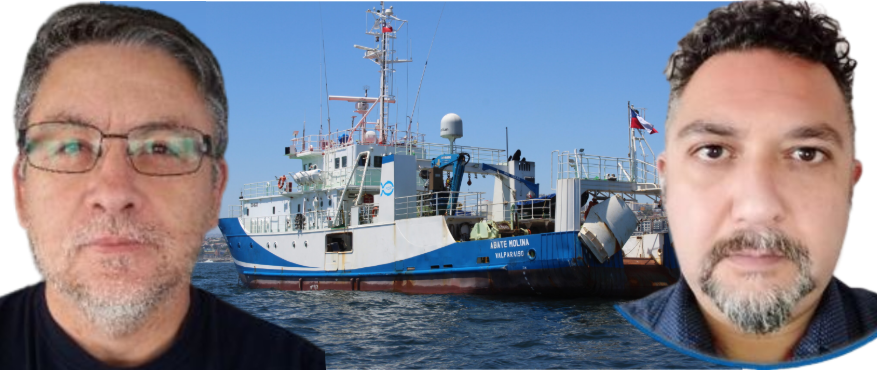
 UNITED STATES
.png) But there were many more. Vessels such as Altamar, Campa de Torres, Cieisa Once, Cieisa Doce, Nuevo Mundo, Sobroso, Ciudad de Cristal, Flipper, and Piñeiro Correa. "The squid fishery was very profitable," added another businessman consulted. Minor repairs and crew changes were carried out on New York docks, with “extreme care” to ensure that not a single lobster had slipped in among the cephalopods, “not even a leg in the galley.”
But there were many more. Vessels such as Altamar, Campa de Torres, Cieisa Once, Cieisa Doce, Nuevo Mundo, Sobroso, Ciudad de Cristal, Flipper, and Piñeiro Correa. "The squid fishery was very profitable," added another businessman consulted. Minor repairs and crew changes were carried out on New York docks, with “extreme care” to ensure that not a single lobster had slipped in among the cephalopods, “not even a leg in the galley.” NORWAY
 The price of fresh Norwegian salmon has continued to slide over the past week as industry leaders met to debate the future direction of the sector at the
 Extra cargo flights from Oslo Airport to support seafood exports to Asia.
 CANADA
 Atlantic Canada is set to strengthen its position as a global leader in marine technology and aquaculture with the launch of a new programme designed to commercialise regional innovation.
 BELGIUM
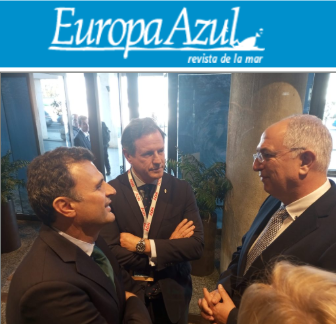 Commissioner Costas Kadis promises to review the methodology used to translate scientific data into restrictions and present a proposal before the end of the year. Catalan fishing guilds applaud the shift, but demand specifics and consensus with the sector.
 SPAIN
SPAIN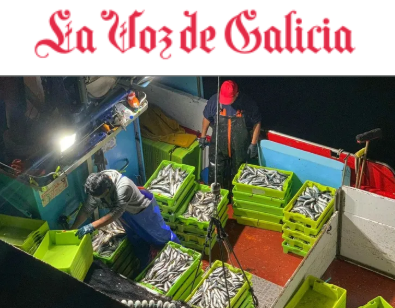 As announced at the end of last year, the General Secretariat for Fisheries is entering into negotiations with the Portuguese Secretariat for Fisheries and the Sea to renew the Iberian sardine management agreement for next year and subsequent years. At a meeting held on March 4th in Madrid, Spain's Isabel Artime and her Portuguese counterpart, Salvador Malheiro, formalized the creation of a working group in which Spain will "promote a review of the current allocation key, the percentage of quota allocated to each country, to align it with the actual catch by each country's fleet."
  DENMARK
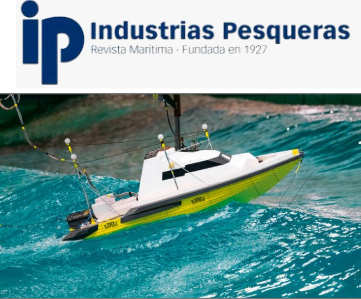 Norwegian Maritime Partner is building seven new search and rescue (SAR) vessels for the Danish Armed Forces. Together with researchers and technicians from
  MEXICO
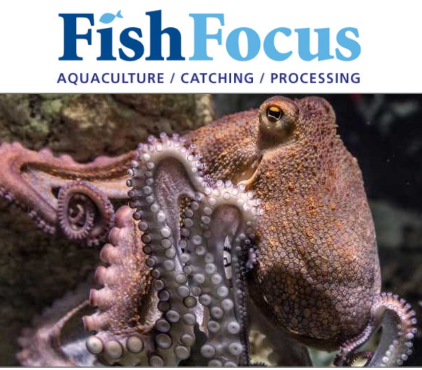 Mexico has introduced legislation to ban all cephalopod farming nationwide. The proposed bill makes Mexico the second country in Latin America to propose legislation to ban octopus farming, following a similar federal bill introduced in Chile in 2025. Senator Maki Esther Ortiz Domínguez, of the Partido Verde Ecologista de México (PVEM), presented the bill last week in the Mexican Senate. It proposes reforms to the General Law of Sustainable Fisheries and Aquaculture that would prohibit the breeding or growth stages of any cephalopod species in Mexican territory. No concessions or permits would be granted for such activities. The bill now moves to the relevant Senate commissions for discussion.
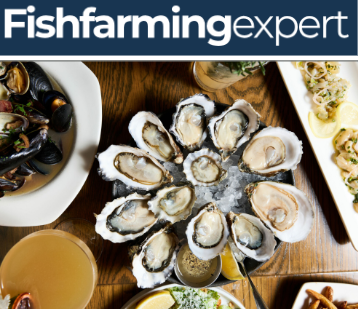 Taylor Shellfish Farms
.png) More than 20,000 square meters of exhibition space, the participation of more than 550 exhibiting companies, and an International Congress that will bring together more than 40 speakers to address the main challenges of the aquaculture industry in Chile and the world will shape
More than 20,000 square meters of exhibition space, the participation of more than 550 exhibiting companies, and an International Congress that will bring together more than 40 speakers to address the main challenges of the aquaculture industry in Chile and the world will shape