STELLENDAM/DEN HELDER – The squid also swims across the northern head. A dozen Eurokotters (EU trawlers) were there this week in the zone off the North Holland coast, trawling.
The same goes for the OD 3, which fished with boards for the first time last week after the shrimp season. On Friday 18 October, the switch was made in front of the door in the home port of Stellendam near Westvoorn. Last spring, the Eurokotter got a net roller on the back again and skipper Jan Pieter Luime fished for squid for the first time for a few weeks.
"We just steamed over to the fleet of colleagues. For us this is unknown fishing territory. Previous"It was a bit difficult to get into it last week, but now it's going well," said Luime from the sea.
Source:VisserijNieuws (translated from original in Dutch)
Scientists and authorities from eight coastal nations across the Americas warned that the 2026 El Niño event is consolidating as one of the largest instrumentally recorded, pointing to a steady increase in both the frequency and magnitude of ENSO cycles.
The alert was issued during a regional conference held in Panama City from October 14 to 16, 2026.
The delegation from Chile was led by the executive director of the Fisheries Development Institute (IFOP), Luis Parot, representing the Undersecretariat for Fisheries, alongside oceanographer Dr. Jaime Letelier Pino (ERFEN-Chile). The summit also brought together experts from the FAO and the Permanent Commission for the South Pacific (CPPS).
Specialists emphasized that coastal ecosystems and local fish stocks exhibit high vulnerability starting in the initial stages of the phenomenon, impacting their distribution, abundance, and reproductive cycles. In response to these direct marine habitat alterations, IFOP will intensify monitoring of strategic fishery resources, including swordfish (Xiphias gladius).
Tokyo — Japanese seafood group Nissui announced that its subsidiary, Nissui Logistics, has fully restored cargo receiving and shipping operations at all 17 facilities following an IT disruption caused by unauthorized access to systems operated by its technology provider, IDC Frontier.
The incident initially disrupted the company's logistics activities. Operations began to resume partially on October 9, with full restoration confirmed on October 20.
Nissui stated that it will strengthen its cybersecurity measures, third-party risk management, and business continuity and recovery procedures.
The incident highlights the vulnerability of cold-chain logistics to cyberattacks affecting technology providers and underscores the importance of maintaining operational continuity across the food supply chain.
Presents "Vision 2040" with measures that fail to address urgent problems
Yesterday in Strasbourg, Commissioner for Fisheries and Oceans Costas Kadis unveiled the long-awaited "Vision 2040" for EU fisheries and aquaculture—a strategy designed to build a competitive, resilient, and sustainable sector over the next 15 years. However, this forward-looking plan defers too many issues that, according to industry professionals, require urgent, immediate action. Specifically, it sidesteps a reform of the 2013 Common Fisheries Policy (CFP)—a reform that the European Commission continues to avoid, thirteen years later.
Author: J. G. Santalla / S. M. / La Voz de Galicia | Read the full article here
Authorities and salmon producers in Chile’s Aysén region are reviewing preparations for potential mass fish mortality as the critical period for El Niño is expected to begin in December.
The work covers early-warning systems, company contingency plans and the capacity to respond to harmful algal blooms, according to a statement issued by fisheries and aquaculture regulator Sernapesca on 19 October.
Regional director Daniela Leiva said advance coordination was necessary ahead of the expected December risk period.
Source: SalmonBusiness | Read the full article here
Thai Union chose Zunibal for its AI expertise and practical, cost-effective approach to Electronic Monitoring.
Zunibal will deliver the full service, covering onboard deployment, technical support, cloud-based data management, video analysis and reporting.
Clearer insight into what happens at sea supports responsible sourcing, MSC compliance and fisheries improvement, with the long-term aim of making a positive impact on ocean health.
It’s not unusual in fish farming to see the same facts spun in completely different ways, depending on whether the storyteller is supportive of or opposed to the industry. It’s rarer to see two different takes from the same sector, but that’s what’s happened on the issue of using poultry by-products in feed.
The imperative to seek alternatives to marine ingredients increased last Friday when Peru, the world’s biggest anchovy producer, confirmed it will not authorise a second anchovy season in the country’s North-Central zone in order to protect stocks that have been affected by the El Niño climate event.
Author: Gareth Moore / fishfarmingexpert | Read the full article here
Regulatory authority MAST has amended operational licences for Viðlagafjara and Friðarhöfn, authorizing genetic supply from Norway without altering permitted production capacities.
Icelandic land-based Atlantic salmon (Salmo salar) producer Laxey has received official regulatory approval to amend two of its operational permits in Vestmannaeyjar, allowing the company to introduce fertilized salmon ova produced by Norwegian breeding company AquaGen into its facilities.
The determination was officially published on October 19, 2026, by the Icelandic Food and Veterinary Authority (MAST), specifically applying to the Viðlagafjara site (licence FE-1212) and the Friðarhöfn facility (licence FE-1211). Both rulings explicitly authorize the receipt of genetic material supplied by the Norwegian provider, complementing the sources previously authorized for the enterprise: Atlantic salmon ova from Benchmark Genetics (StofnFiskur) and rainbow trout (Oncorhynchus mykiss) ova imported from Denmark.
The administrative procedure commenced following a formal application submitted by Laxey on June 12, 2026. The statutory review included a public consultation window conducted between August 18 and September 16, 2026, during which MAST evaluated comments submitted by four stakeholders.
PORT VILA – The Royal New Zealand Air Force (RNZAF) has completed a two-week maritime surveillance and reconnaissance patrol operation in Vanuatu's jurisdictional waters, working in close coordination with local agencies and the Forum Fisheries Agency (FFA).
The mission was conducted by an MC-12K King Air aircraft from No. 42 Squadron, temporarily based in Port Vila. During the flights, officers from the Vanuatu Police Maritime Unit, the Vanuatu Fisheries Office, and the Vanuatu Transnational Crime Squad were embarked, focusing monitoring efforts on "dark vessels"—craft deliberately operating without tracking or identification systems to evade fisheries enforcement and transnational crime controls.
The deployment logged activity from multiple fishing vessels and pleasure craft for subsequent regulatory investigation. Additionally, at the request of the Vanuatu National Disaster Management Office (VNDMO), the crew gathered updated imagery of the Ambrym and Ambae volcanoes, confirming eruptive and geothermal activity across their active craters.
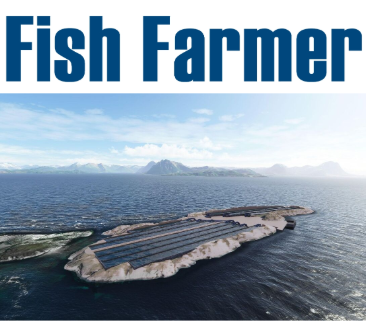
Gigante Salmon, the Arctic land based fish farmer, now has fish in all three pools in its simultaneously for the first time.
The company has a land-based farm at Lille Indre Rosøy in Rødøy municipality, Nordland, northern Norway. It uses a hybrid flow-through system supplied with natural seawater.
Gigante reports today that it is continuing to scale up production throughout the third quarter through further biomass growth, the stocking of the majority of the H2026 generation, and continued efforts to optimise production, fish welfare and biological performance.
Author: Vince McDonagh / Fish Farmer | Read the full article here
Technical dialogue in Can Tho brought together nearly two hundred sector stakeholders to facilitate the transition toward unified sustainability benchmarks and continued global market access.
Can Tho – The Aquaculture Stewardship Council (ASC) has stepped up its technical assistance for Vietnamese aquaculture producers to support the rollout of its unified ASC Farm Standard. During a collaborative workshop held in Can Tho alongside the Vietnam Association of Seafood Exporters and Producers (VASEP), nearly 200 participants gathered, including farmers, processors, exporters, and industry specialists.
The session focused on clarifying operational criteria under the new standard, which evaluates environmental performance, animal welfare, and social responsibility across all farmed species. Throughout the discussions, ASC representatives emphasized that certification must function as a practical framework adapted to local realities, highlighting pathways such as the ASC Improver Programme (AIP) to guide small-scale producers through phased compliance.
Through targeted technical guidance and continuous capacity building, ASC aims to help Vietnamese aquaculture maintain its competitive edge in key international markets, sustain robust supply chain integration, and uphold verifiable responsible farming practices.



 NETHERLANDS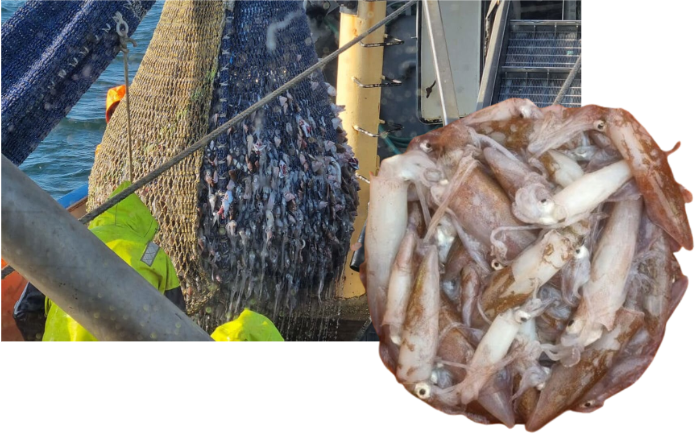
.png)
 PANAMA
.png)
 JAPAN
JAPAN.png) Tokyo — Japanese seafood group Nissui announced that its subsidiary, Nissui Logistics, has fully restored cargo receiving and shipping operations at all 17 facilities following an IT disruption caused by unauthorized access to systems operated by its technology provider, IDC Frontier.
Tokyo — Japanese seafood group Nissui announced that its subsidiary, Nissui Logistics, has fully restored cargo receiving and shipping operations at all 17 facilities following an IT disruption caused by unauthorized access to systems operated by its technology provider, IDC Frontier. EUROPEAN UNION
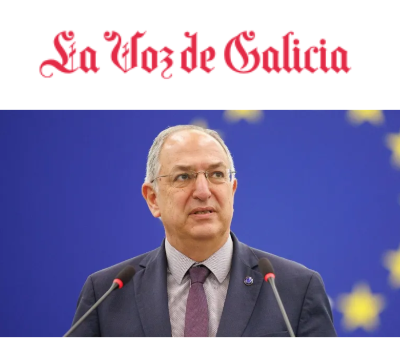 Yesterday in Strasbourg, Commissioner for Fisheries and Oceans Costas Kadis unveiled the long-awaited "Vision 2040" for EU fisheries and aquaculture—a strategy designed to build a competitive, resilient, and sustainable sector over the next 15 years. However, this forward-looking plan defers too many issues that, according to industry professionals, require urgent, immediate action. Specifically, it sidesteps a reform of the 2013 Common Fisheries Policy (CFP)—a reform that the European Commission continues to avoid, thirteen years later.
 CHILE
CHILE.png) Authorities and salmon producers in Chile’s Aysén region are reviewing preparations for potential mass fish mortality as the critical period for El Niño is expected to begin in December.
Authorities and salmon producers in Chile’s Aysén region are reviewing preparations for potential mass fish mortality as the critical period for El Niño is expected to begin in December. THAILAND
 NORWAY
 It’s not unusual in fish farming to see the same facts spun in completely different ways, depending on whether the storyteller is supportive of or opposed to the industry. It’s rarer to see two different takes from the same sector, but that’s what’s happened on the issue of using poultry by-products in feed.
 ICELAND
.png) Icelandic land-based Atlantic salmon (Salmo salar) producer Laxey has received official regulatory approval to amend two of its operational permits in Vestmannaeyjar, allowing the company to introduce fertilized salmon ova produced by Norwegian breeding company AquaGen into its facilities.
Icelandic land-based Atlantic salmon (Salmo salar) producer Laxey has received official regulatory approval to amend two of its operational permits in Vestmannaeyjar, allowing the company to introduce fertilized salmon ova produced by Norwegian breeding company AquaGen into its facilities. NEW ZEALAND
.jpg)
 Gigante Salmon
 VIET NAM
.jpg)