IN BRIEF - Species diversification in aquaculture as a tool to promote sustainability
UZBEKISTAN
Friday, March 31, 2023
A Regional Workshop on Aquaculture Diversification targeting smallholder farmers and extension agents was co-hosted by the Food and Agriculture Organization of the United Nations (FAO) in partnership with the Committee of Veterinary and Livestock Development of the Republic of Uzbekistan, the Uzbekistan Research Institute of Fisheries and the “O’zbekbaliqsanoat” Association.
The workshop, which took place in Tashkent, was organized as a component of the “Capacity Development for Sustainable Fisheries and Aquaculture Management in Central Asia, Azerbaijan and Türkiye – FISHCap Project”, a project developed under the FAO-Türkiye Partnership Programme (FTPP II).
Species diversification in aquaculture is a strategy that contributes towards sustainable sectoral development. The event provided participants with an understanding of potential opportunities and constraints to the diversification of aquaculture production in their countries, and insights into the modalities for new species introductions requiring the support of government agencies, researchers and the private sector.
Tokyo — Japanese seafood group Nissui announced that its subsidiary, Nissui Logistics, has fully restored cargo receiving and shipping operations at all 17 facilities following an IT disruption caused by unauthorized access to systems operated by its technology provider, IDC Frontier.
The incident initially disrupted the company's logistics activities. Operations began to resume partially on October 9, with full restoration confirmed on October 20.
Nissui stated that it will strengthen its cybersecurity measures, third-party risk management, and business continuity and recovery procedures.
The incident highlights the vulnerability of cold-chain logistics to cyberattacks affecting technology providers and underscores the importance of maintaining operational continuity across the food supply chain.
Regulatory authority MAST has amended operational licences for Viðlagafjara and Friðarhöfn, authorizing genetic supply from Norway without altering permitted production capacities.
Icelandic land-based Atlantic salmon (Salmo salar) producer Laxey has received official regulatory approval to amend two of its operational permits in Vestmannaeyjar, allowing the company to introduce fertilized salmon ova produced by Norwegian breeding company AquaGen into its facilities.
The determination was officially published on October 19, 2026, by the Icelandic Food and Veterinary Authority (MAST), specifically applying to the Viðlagafjara site (licence FE-1212) and the Friðarhöfn facility (licence FE-1211). Both rulings explicitly authorize the receipt of genetic material supplied by the Norwegian provider, complementing the sources previously authorized for the enterprise: Atlantic salmon ova from Benchmark Genetics (StofnFiskur) and rainbow trout (Oncorhynchus mykiss) ova imported from Denmark.
The administrative procedure commenced following a formal application submitted by Laxey on June 12, 2026. The statutory review included a public consultation window conducted between August 18 and September 16, 2026, during which MAST evaluated comments submitted by four stakeholders.
PORT VILA – The Royal New Zealand Air Force (RNZAF) has completed a two-week maritime surveillance and reconnaissance patrol operation in Vanuatu's jurisdictional waters, working in close coordination with local agencies and the Forum Fisheries Agency (FFA).
The mission was conducted by an MC-12K King Air aircraft from No. 42 Squadron, temporarily based in Port Vila. During the flights, officers from the Vanuatu Police Maritime Unit, the Vanuatu Fisheries Office, and the Vanuatu Transnational Crime Squad were embarked, focusing monitoring efforts on "dark vessels"—craft deliberately operating without tracking or identification systems to evade fisheries enforcement and transnational crime controls.
The deployment logged activity from multiple fishing vessels and pleasure craft for subsequent regulatory investigation. Additionally, at the request of the Vanuatu National Disaster Management Office (VNDMO), the crew gathered updated imagery of the Ambrym and Ambae volcanoes, confirming eruptive and geothermal activity across their active craters.
Gigante Salmon, the Arctic land based fish farmer, now has fish in all three pools in its simultaneously for the first time.
The company has a land-based farm at Lille Indre Rosøy in Rødøy municipality, Nordland, northern Norway. It uses a hybrid flow-through system supplied with natural seawater.
Gigante reports today that it is continuing to scale up production throughout the third quarter through further biomass growth, the stocking of the majority of the H2026 generation, and continued efforts to optimise production, fish welfare and biological performance.
Author: Vince McDonagh / Fish Farmer | Read the full article here
Technical dialogue in Can Tho brought together nearly two hundred sector stakeholders to facilitate the transition toward unified sustainability benchmarks and continued global market access.
Can Tho – The Aquaculture Stewardship Council (ASC) has stepped up its technical assistance for Vietnamese aquaculture producers to support the rollout of its unified ASC Farm Standard. During a collaborative workshop held in Can Tho alongside the Vietnam Association of Seafood Exporters and Producers (VASEP), nearly 200 participants gathered, including farmers, processors, exporters, and industry specialists.
The session focused on clarifying operational criteria under the new standard, which evaluates environmental performance, animal welfare, and social responsibility across all farmed species. Throughout the discussions, ASC representatives emphasized that certification must function as a practical framework adapted to local realities, highlighting pathways such as the ASC Improver Programme (AIP) to guide small-scale producers through phased compliance.
Through targeted technical guidance and continuous capacity building, ASC aims to help Vietnamese aquaculture maintain its competitive edge in key international markets, sustain robust supply chain integration, and uphold verifiable responsible farming practices.
Wisefish has connected AI tools to live seafood business data, helping companies improve traceability, operational visibility and decision-making
Wisefish has launched AI Connect, enabling artificial intelligence tools to access live operational data across seafood businesses, from raw material sourcing and production to sales and customer delivery.
The new capability connects tools including Claude, ChatGPT and Microsoft Copilot directly to Wisefish and Microsoft Dynamics 365 Business Central data, allowing users to retrieve information across the value chain, whether seafood is caught, farmed or purchased.
The TAC for the 2026/27 season has been reduced by 18.9% to 3,000 metric tons, while fishermen have agreed to revise the regional allocation.
TOKYO - Japan's Sea of Japan Snow Crab Special Committee has agreed on a new catch quota allocation for the next four years, increasing the relative share assigned to the Hokuriku region.
According to Nikkei Suisan Keizai, the agreement was reached during a closed-door meeting in Kobe and applies to the snow crab stock in Area A of the Sea of Japan.
The total allowable catch (TAC) for 2026/27 has been set at 3,000 metric tons, down from 3,700 metric tons in the previous season, representing an 18.9% reduction.
The redistribution aims to reorganize access to the resource among participating fleets, potentially affecting landings, port activity, and supplies to seafood processors.
Termavi has formalized the expansion of its premises on the Guixar waterfront. The company that manages the Vigo container terminal will increase its space for container logistics operations by 1,440 square meters, following the transfer of the concession previously held by Alpenor. This area will be added to the 180,000 square meters the firm already manages along the city’s waterfront.
Last February, the Port’s board of directors gave the green light for Termavi to take over the facilities formerly held by the now-defunct Alpenor; the company has now taken the next step to formalize its acquisition of these storage areas.
Author: A. Pascual / La Voz de Galicia | Read the full article here
Pangasius surimi, sourced from a freshwater fish primarily farmed in Asia, is gaining interest as a potential substitute for Alaska pollock in the Japanese manufacture of kamaboko, chikuwa, and other fish paste products.
Photo: NamMy Seafood
According to a report by Nikkei Suisan Keizai, difficulties in procuring US surimi—traditionally dominant in this market—are driving the search for new raw materials.
The trend coincides with a crisis declaration issued on October 15 by the Japan Kamaboko Association, which warned of historically high prices and supply restrictions.
Pangasius offers a potential alternative to diversify suppliers and reduce costs, though its widespread adoption will depend on texture, gelling capacity, quality, and commercial acceptance.
Japanese aquaponics company Aquponi has launched an indoor production system combining rainbow trout farming with strawberry cultivation, with two installations already established in Japan.
The Yokohama-based company announced the commercial launch of its Aquponi Berry Farm system on 5 October, alongside a dedicated aquaponics feed.
Aquaponics combines fish farming with growing plants without soil. Nutrients in the fish-rearing water support plant growth, allowing the two crops to be produced within a linked system.
The system uses triploid rainbow trout, marketed in Japan as salmon.
Source: SalmonBusiness | Read the full article here




 UZBEKISTAN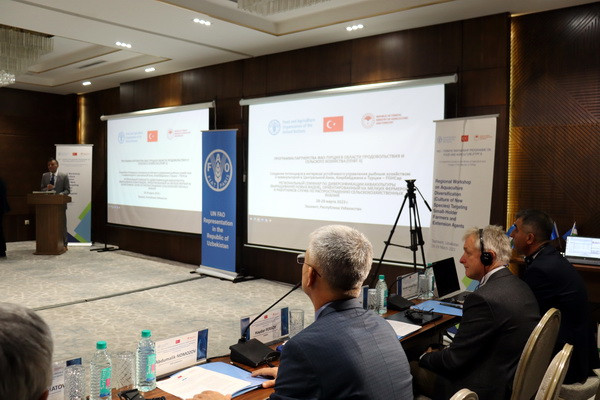
 JAPAN
JAPAN.png) Tokyo — Japanese seafood group Nissui announced that its subsidiary, Nissui Logistics, has fully restored cargo receiving and shipping operations at all 17 facilities following an IT disruption caused by unauthorized access to systems operated by its technology provider, IDC Frontier.
Tokyo — Japanese seafood group Nissui announced that its subsidiary, Nissui Logistics, has fully restored cargo receiving and shipping operations at all 17 facilities following an IT disruption caused by unauthorized access to systems operated by its technology provider, IDC Frontier. ICELAND
.png) Icelandic land-based Atlantic salmon (Salmo salar) producer Laxey has received official regulatory approval to amend two of its operational permits in Vestmannaeyjar, allowing the company to introduce fertilized salmon ova produced by Norwegian breeding company AquaGen into its facilities.
Icelandic land-based Atlantic salmon (Salmo salar) producer Laxey has received official regulatory approval to amend two of its operational permits in Vestmannaeyjar, allowing the company to introduce fertilized salmon ova produced by Norwegian breeding company AquaGen into its facilities. NEW ZEALAND
.jpg)
 NORWAY
 Gigante Salmon
 VIET NAM
.jpg)
.png) Wisefish
Wisefish.png) TOKYO - Japan's Sea of Japan Snow Crab Special Committee has agreed on a new catch quota allocation for the next four years, increasing the relative share assigned to the Hokuriku region.
TOKYO - Japan's Sea of Japan Snow Crab Special Committee has agreed on a new catch quota allocation for the next four years, increasing the relative share assigned to the Hokuriku region. SPAIN
SPAIN.png) Termavi has formalized the expansion of its premises on the Guixar waterfront. The company that manages the Vigo container terminal will increase its space for container logistics operations by 1,440 square meters, following the transfer of the concession previously held by Alpenor. This area will be added to the 180,000 square meters the firm already manages along the city’s waterfront.
Termavi has formalized the expansion of its premises on the Guixar waterfront. The company that manages the Vigo container terminal will increase its space for container logistics operations by 1,440 square meters, following the transfer of the concession previously held by Alpenor. This area will be added to the 180,000 square meters the firm already manages along the city’s waterfront..jpg)
 Japanese aquaponics company