IN BRIEF - Shrimp Mortality in Mexico's Sinaloa Triggers Statewide Disease Investigation
MEXICO
Monday, November 16, 2026
Shrimp farmers face survival rates of just 60–70%, while suspected emerging diseases, unfavorable environmental conditions and falling prices linked to foreign shrimp imports threaten the profitability of aquaculture production.
SINALOA, MEXICO – The Sinaloa State Aquaculture Health Committee (Cesasin) will conduct a statewide sanitary investigation following unusual shrimp mortality episodes reported at at least four aquaculture farms, raising concerns about the possible presence of emerging pathogens.Carlos Urías Espinoza, president of the Confederation of Aquaculture Organizations of the State of Sinaloa (Coades), warned that the sector is facing mounting challenges, combining persistently low shrimp survival rates with deteriorating market conditions.
European fishing fleet could resume operations in February 2027.
The EU and Mauritania agreed on a new protocol maintaining fishing quotas and benefiting around 30 Spanish vessels.
Pending formal approval, the agreement will promote sustainable fisheries, marine resource protection and the development of Mauritania’s blue economy.
Prolonged drought threatens fish and prawn farming.
The Ministry of Fisheries assessed 30 farms in Ra, finding declining water supplies at 45% of them, while nine ponds in Nadroga have dried up. Authorities recommend emergency harvesting and urgent supplies of feed, water pumps and storage tanks.
Potentially record-breaking seizure raises concerns over industrial-scale illegal fishing.
Australian authorities intercepted a vessel in the Arafura Sea carrying over 25 tonnes of frozen seafood, including sharks, rays and shark fins. The crew was detained in Darwin pending investigation.
The meeting in Vilamoura resulted in the approval of 17 recommendations, a 25% increase in the catch limit for South Atlantic swordfish, and the setting of a provisional quota of 24,333 tonnes for South Atlantic albacore.
On November 23, the International Commission for the Conservation of Atlantic Tunas (ICCAT) concluded its meeting in Vilamoura, Portugal, by reaching an agreement—following 18 years of negotiations—on the handling of shark fins on board vessels. During this 60th-anniversary meeting, the organization also reviewed catch limits for tropical tunas for 2027 and approved new measures to monitor fishing activity.
The measure concerning sharks applies to specimens caught in association with fisheries managed by ICCAT. Before storing them in the hold, vessels must either keep the fins attached to the carcass using rope or wire, or affix identical, numbered tags to both the carcass and its fins.
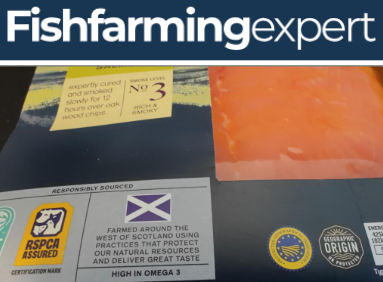
RSPCA Assured has today notified its salmon members of the RSPCA’s new welfare standards for farmed Atlantic salmon which aim to further strengthen fish welfare at every stage of a salmon’s life. Key changes include improved staff training requirements, clearer guidance on managing environmental risks, and more robust welfare outcome assessments.
The new standards come into effect from February 22 next year following the usual three-month notification period to RSPCA Assured members.
Source: fishfarmingexpert | Read the full article here
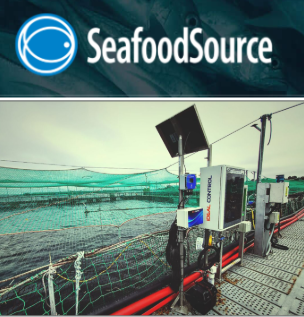
Chilean energy firm AbastibleTec has entered into a strategic alliance with aquaculture technology firm Ideal Control, aiming to bring about greater operational efficiency in Chile’s fish-farming industry.
Both firms are projecting to help generate more than USD 10 million (EUR 9.1 million) in operational efficiency initiatives for the Chilean aquaculture industry through the use of integrated data tools and artificial intelligence. These tools will help scale solutions designed to optimize the management of critical resources, such as oxygen, water, and energy, across Chilean salmon-farming sites, hatcheries, and other production facilities.
AbastibleTec is the technology subsidiary of Chilean energy company Abastible.
Author: Christian Molinari / SeafoodSource | Read the full article here
An aquaculture company is planning a 2,000-tonne salmon and trout farming development in Argentina's Chubut province, as provincial lawmakers prepare to vote on legislation establishing a regulatory framework for the industry.
Leufupil Patagonia SAS plans to produce Chinook salmon and rainbow trout in the Senguer river basin, with the potential to diversify into coho salmon production.
Company director Patricio Bravo told Chilean publication InfoSalmon that the project had secured foreign financing but that investment remained dependent on the passage of provincial aquaculture legislation.
Source: SalmonBusiness | Read the full article here
Inventories at major Chinese ports drop 6.62% week on week, as Peruvian fishmeal maintains high prices and feed manufacturers restrict purchases to immediate operational needs.
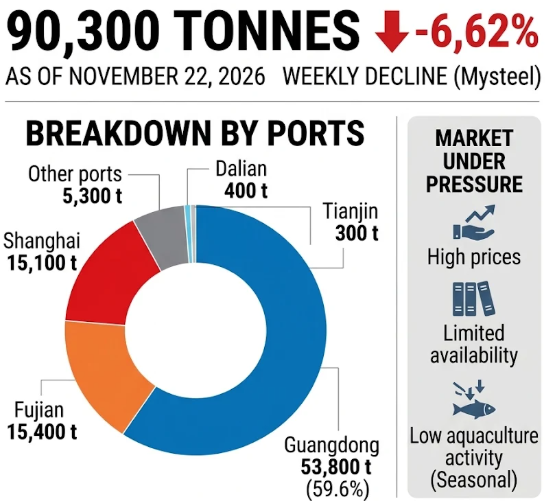
CHINA — Imported fishmeal inventories across major ports in China dropped to 90,300 metric tonnes as of November 22, 2026, marking a 6.62% weekly decline, according to data released on November 23 by consultancy firm Mysteel. The drawdown extends the ongoing contraction of port stockpiles, aligning with elevated prices, tight availability, and subdued demand driven by seasonal slowdowns in aquaculture activity.
The report identifies Guangdong as the leading storage hub, holding 53,800 tonnes, approximately 59.6% of the total monitored inventory. It is followed by Fujian with 15,400 tonnes and Shanghai with 15,100 tonnes. Stockpiles in other ports aggregate 5,300 tonnes, while Dalian and Tianjin post 400 and 300 tonnes, respectively.
Fish reached an average weight of 2 kg in the fourth year of trials; survival remains a challenge for future commercial operations.
NEMURO - On November 23, approximately 2,000 rainbow trout (Oncorhynchus mykiss) farmed in marine sea cages were landed at Hanasaki Port in Hokkaido, with an average weight of around 2 kg per fish, Kushiro Shimbun reported on November 24.
The project, promoted by a local aquaculture council, began its fourth trial campaign in June with 3,500 juveniles. The trial aims to capitalize on regional conditions to develop new aquaculture ventures and diversify fishery production.
In the previous season, 1,541 fish were landed, recording a survival rate of 31% and an average weight of 1.2 kg. Although the average size of the specimens has grown, the municipal technical director noted that losses will need to be analyzed and farming outcomes improved. The batch auction was scheduled for November 24, with no confirmed price in the consulted report.
The European Commission proposed 54,127 fishing days for Spain, 54,995 for Italy, and 8,575 for France in 2027. Additional conservation measures could increase Spain's allocation to 73,391 days and Italy's to 59,076.
The proposal addresses continued pressure on fish stocks: 13 of 14 assessed stocks remain overfished, while 7 are below precautionary biomass levels.
The plan also includes higher quotas for common dolphinfish (+14.33%), giant red shrimp (+4.46%), and blue and red shrimp (+28.42%) in specific Mediterranean fisheries.
EU fisheries ministers will discuss the proposal on December 14–15, 2026.





 MEXICO
.png) SINALOA, MEXICO – The Sinaloa State Aquaculture Health Committee (Cesasin) will conduct a statewide sanitary investigation following unusual shrimp mortality episodes reported at at least four aquaculture farms, raising concerns about the possible presence of emerging pathogens.Carlos Urías Espinoza, president of the Confederation of Aquaculture Organizations of the State of Sinaloa (Coades), warned that the sector is facing mounting challenges, combining persistently low shrimp survival rates with deteriorating market conditions.
 EUROPEAN UNION
.png) European fishing fleet could resume operations in February 2027.
 FIJI
.png) Prolonged drought threatens fish and prawn farming.
 AUSTRALIA
 Potentially record-breaking seizure raises concerns over industrial-scale illegal fishing.
 SPAIN
.png) The meeting in Vilamoura resulted in the approval of 17 recommendations, a 25% increase in the catch limit for South Atlantic swordfish, and the setting of a provisional quota of 24,333 tonnes for South Atlantic albacore.
 UNITED KINGDOM
 RSPCA
 CHILE
 Chilean energy firm AbastibleTec has entered into a strategic alliance with aquaculture technology firm Ideal Control, aiming to bring about greater operational efficiency in Chile’s fish-farming industry.
 ARGENTINA
 An aquaculture company is planning a 2,000-tonne salmon and trout farming development in Argentina's Chubut province, as provincial lawmakers prepare to vote on legislation establishing a regulatory framework for the industry.
 CHINA
 JAPAN
.png)
.png) The proposal addresses continued pressure on fish stocks: 13 of 14 assessed stocks remain overfished, while 7 are below precautionary biomass levels.