IN BRIEF - Javier Garat, elected president of the Maritime Cluster Spanish,
SPAIN
Wednesday, November 29, 2023
The general secretary of theSpanish Fisheries Confederation (CEPESCA), Javier Garat, has been appointed president of the Spanish Maritime Cluster, an organization that represents all economic activities, institutions, associations and companies that have a relationship with the sea, and whose objective is extend and improve the so-called blue economy, acting as a communication vehicle for the sector with the Government and public administrations.
Garat has a degree in Law and a diploma in Community Law from the Complutense University of Madrid (C.E.U. San Pablo) and a Master's degree in International and European Law from the Catholic University of Leuven (U.C.L. Belgium). The new president of the Spanish Maritime Cluster, a full academician of the Royal Academy of the Sea, has an extensive career in the field of fishing that began in 1996 when he joined the team of the Legal Service of the European Commission and as assistant to the Fisheries Counselor of the Permanent Representation of Spain to the European Union.
The Pacific herring (Clupea pallasii) fishery in the Russian Far East reached outstanding milestones over the past week, following an increase of 12,400 metric tons.
With this surge, cumulative landings for the year to date reached 588,700 metric tons, exceeding the volume recorded during the same period in 2025 by 153,000 metric tons. In addition, the Russian fishing fleet processed over 478,400 metric tons of this resource on board using its own raw material.
This commercial upswing aligns with evaluations from the scientific community. Experts from the Sakhalin branch of the Russian Federal Research Institute of Fisheries and Oceanography (VNIRO) point out that, over the past decade, Sakhalin-Hokkaido herring stocks have shown a steady growth trend off the southern coast of Sakhalin and the South Kuril Islands.
If current harvest intensity continues, the biomass available in the East Sakhalin subzone could conclude the cycle by setting a new landings record for the 21st century.
NUUK — Several Greenlandic fisheries are nearing their annual catch limits, according to tracking data from the Greenland Fisheries and Hunting Control (Grønlands Fiskeri- og Jagtkontrol / GFJK) updated through October 25.
Southeast Greenlandcod (Gadus morhua) stands at 5,285 metric tons out of a 5,290-ton quota, representing 99.9% uptake. The northern shrimp (Pandalus borealis) allocation for Norway in East Greenland waters has reached 99.7%, leaving a remaining margin of just four metric tons.
Also notable is the Faroese allocation of cod in Southeast Greenland, which has reached 97.1% utilization, while inshore cod harvesting in West Greenland has attained 90.7%.
These uptake levels require strict monitoring by vessel owners and processors. The GFJK notes that these recorded figures are preliminary and subject to administrative adjustment. Reaching the formal accounting limit of a quota does not automatically result in an immediate official closure order.
Commercial cod fishing in the Barents Sea is poised for recovery following an agreed 14% increase in the total allowable catch (TAC) for 2027.
The decision was confirmed by Ilya Shestakov, head of the Federal Agency for Fisheries (Rosrybolovstvo), following the annual bilateral summit of the Joint Russian-Norwegian Fisheries Commission.
The intergovernmental body oversees shared marine stock management across both the Barents Sea and the Norwegian Sea. Beyond cod, delegates established harvest quotas and regulatory frameworks for haddock, capelin, halibut, and perch, alongside quota exchange mechanisms backed by an international scientific working group.
According to Rosrybolovstvo, sustained environmental monitoring shows biomass indicators entering a positive reversal across the Northern Basin following years of stock decline, enabling the upward quota adjustment for fleet operators in Russia and Norway.
Initiative targets post-harvest losses and improved fish quality.
Sri Lanka and Japan's JICA are preparing a cold-chain project for coastal and deep-sea fisheries.
A feasibility study, scheduled for November 2026–February 2027, will assess fish losses and infrastructure needs before investment decisions. Funding remains unconfirmed.
Barents Sea cod quota rises 14% after six years of cuts.
Norway and Russia agreed on 325,000 tonnes of cod and 180,336 tonnes of haddock (+18%) for 2027. Greenland halibut rises 11%, redfish falls 3%, and capelin remains closed. The deal extends joint management rules for five years.
Fleet monitoring and digital traceability support efforts to lift the EU yellow card.
Ha Tinh has registered 100% of fishing vessels, equipped all active offshore boats ≥15 m with VMS and raised electronic catch traceability (eCDT) use from 27% to 46%. Authorities also operate 9 landing sites and strengthen port inspections.
India has begun the development phase of a national action plan for its inland small-scale fisheries, and is planning to set a target of 30 million metric tons (MT) of overall fish production in the next five years.
India has been considering a national action plan, and the Bay of Bengal Program Intergovernmental Organization (BOBP-IGO) has called for support from the Food and Agriculture Organization (FAO) to help both the government and the organization create roadmaps in the process. According to BOBP-IGO, the government has now moved into the development phase of that action plan, with a focus “on livelihood improvement, enhanced coordination, and better management of freshwater resources.”
Author: Chris Chase / SeafoodSource | Read the full article here
Work on drilling sea wells has just been completed on Samherji’s land-based salmon farm project at Eldisgarður in the west of Iceland.
The project is also known as the Salmon Garden. Samherji said 21 sea wells have been drilled, at depths of 42 or 36 metres. Drilling work began at the start of the year and the project took about nine months to complete.
Samherji described the development as a major step forward and cause for celebration.
Author: Vince McDonagh / Fish Farmer | Read the full article here
Salmon and trout have been excluded from a zero-rated food category under Brazil's tax reform, prompting Chilean producers to seek changes to the legislation.
Chilean salmon exports to Brazil could face a value-added tax of up to 26.5% under the country's new tax system, raising concerns about the competitiveness of salmon against other animal proteins.
Brazil's tax reform, approved in January 2025, introduces a new system of consumption taxes while exempting a range of essential food products.
Source: SalmonBusiness | Read the full article here
Galician-Mexican fusion cuisine has triumphed at the Conxemar tapas championship—an event designed to promote new, affordable ways to consume fish, featuring 21 participating restaurants from Vigo. La Taberna Rabuda took first place in the third edition of "Conxemar Tapas" with its entry, "Baja Galifornia"—a Baja California-style taco made with a corn tortilla, fried hake, and *mojo verde* (green sauce). The establishment received a 2,000-euro prize for its victory in the competition, which aims to showcase the culinary potential of frozen seafood products to the public. Chefs Miguel Rueda and Andrea Portela plan to keep the taco on their menu for at least two weeks; it is priced at five euros.
Author: L.C. LLERA / La Voz de Galicia | Read the full article here
SUNY Morrisville Joins Initiative to Fully Use Each Fish United States
New York institution becomes sixth educational organization to sign the 100% Great Lakes Fish Pledge
(Morrisville, Nueva York) – SUNY Morrisville has signed the 100% Great Lakes Fish Pledg...





 SPAIN
SPAIN.jpg) Garat has a degree in Law and a diploma in Community Law from the Complutense University of Madrid (C.E.U. San Pablo) and a Master's degree in International and European Law from the Catholic University of Leuven (U.C.L. Belgium). The new president of the Spanish Maritime Cluster, a full academician of the Royal Academy of the Sea, has an extensive career in the field of fishing that began in 1996 when he joined the team of the Legal Service of the European Commission and as assistant to the Fisheries Counselor of the Permanent Representation of Spain to the European Union.
Garat has a degree in Law and a diploma in Community Law from the Complutense University of Madrid (C.E.U. San Pablo) and a Master's degree in International and European Law from the Catholic University of Leuven (U.C.L. Belgium). The new president of the Spanish Maritime Cluster, a full academician of the Royal Academy of the Sea, has an extensive career in the field of fishing that began in 1996 when he joined the team of the Legal Service of the European Commission and as assistant to the Fisheries Counselor of the Permanent Representation of Spain to the European Union. RUSSIAN FEDERATION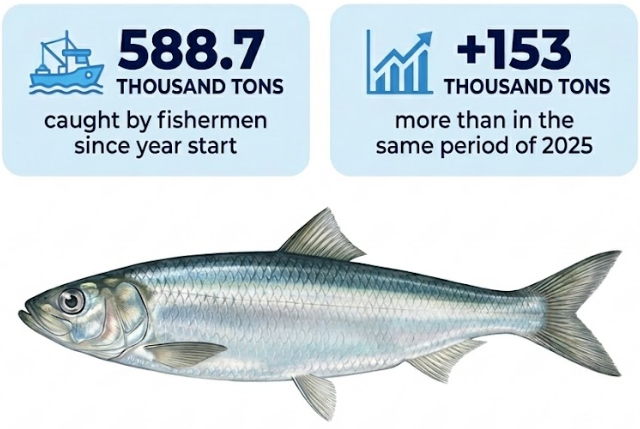
 GREENLAND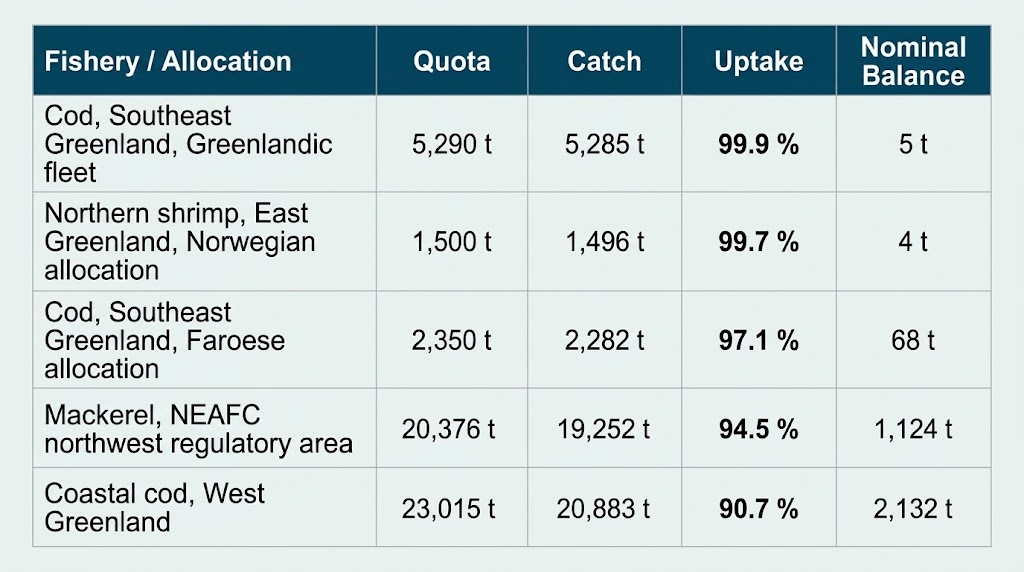
.png) The decision was confirmed by Ilya Shestakov, head of the Federal Agency for Fisheries (Rosrybolovstvo), following the annual bilateral summit of the Joint Russian-Norwegian Fisheries Commission.
The decision was confirmed by Ilya Shestakov, head of the Federal Agency for Fisheries (Rosrybolovstvo), following the annual bilateral summit of the Joint Russian-Norwegian Fisheries Commission. SRI LANKA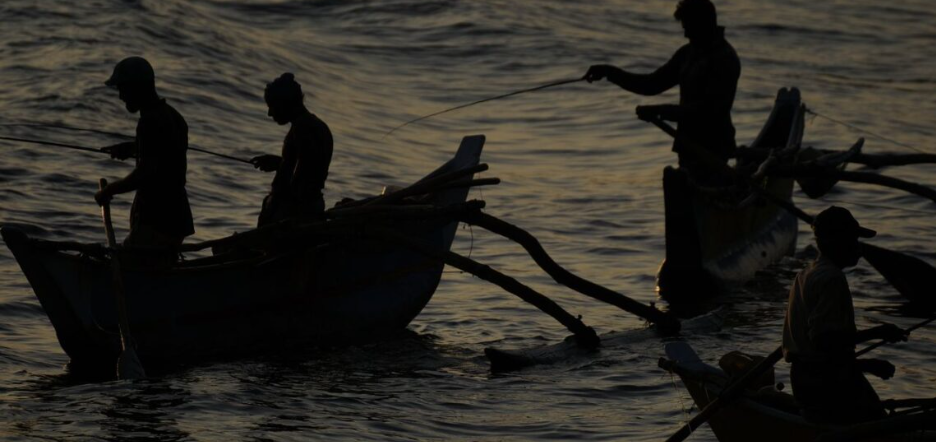
 NORWAY
 Barents Sea cod quota rises 14% after six years of cuts.
 VIET NAM
.png) Fleet monitoring and digital traceability support efforts to lift the EU yellow card.
Fleet monitoring and digital traceability support efforts to lift the EU yellow card. INDIA
INDIA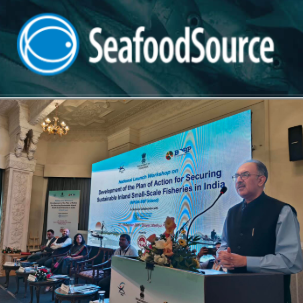 India has begun the development phase of a national action plan for its inland small-scale fisheries, and is planning to set a target of 30 million metric tons (MT) of overall fish production in the next five years.
 ICELAND
.png) Work on drilling sea wells has just been completed on
Work on drilling sea wells has just been completed on  BRAZIL
 Salmon and trout have been excluded from a zero-rated food category under Brazil's tax reform, prompting Chilean producers to seek changes to the legislation.
 Galician-Mexican fusion cuisine has triumphed at the Conxemar tapas championship—an event designed to promote new, affordable ways to consume fish, featuring 21 participating restaurants from Vigo. La Taberna Rabuda took first place in the third edition of "Conxemar Tapas" with its entry, "Baja Galifornia"—a Baja California-style taco made with a corn tortilla, fried hake, and *mojo verde* (green sauce). The establishment received a 2,000-euro prize for its victory in the competition, which aims to showcase the culinary potential of frozen seafood products to the public. Chefs Miguel Rueda and Andrea Portela plan to keep the taco on their menu for at least two weeks; it is priced at five euros.