IN BRIEF - Jala nets $13.1m for aquaculture service boost
INDONESIA
Wednesday, November 29, 2023
Jala, an Indonesia-based aquatech startup, has raised US$13.1 million in a series A round led by Intudo Ventures, with participation from Sinar Mas Digital Ventures as well as existing investors Mirova and Meloy Fund.
The funding will help Jala improve its platform with more in-depth predictions for cultivation performance, water quality, and shrimp disease. It also aims to boost its automated data input capabilities for shrimp weight and feed data.
Founded in 2017 by Aryo Wiryawan and Liris Maduningtyas, Jala’s app enables farmers to record, monitor, and analyze their shrimp farm activities in real time. The firm said that so far, it has helped monitor shrimp across more than 35,000 water bodies for its nearly 20,000 users
The company also offers a credit scoring service, Jala Smartfarm, which gives farmers access to financing options. Meanwhile, its Jala Harvest offering helps farmers bring their products to market.[...]
The soaring price of bunker fuel is shaking up profitability, disrupting the purchase of fishing days in the Pacific, and threatening to reshape the operations of purse seiners, longliners, and onshore processing plants.
Fuel has ceased to be a contextual factor and has become the variable that most directly influences tuna fishing operations. This is the central idea of ??the analysis by Francisco Blaha, who warns that, in a scenario of sharply rising energy costs, diesel and fuel oil not only erode profit margins but also modify routes, fishing decisions, effort allocation, and even the viability of entire segments of the value chain. Market data reinforces this argument. In Singapore, a benchmark for bunker fuel in Asia and a barometer of the western and central Pacific
The Nueva Pescanova Group posted a net profit of €1.1 million in 2025, returning to profitability after several consecutive years of losses, specifically €37.9 million in the previous year (nine months). In the twelve-month period of 2024, losses totaled €91 million.
The company has exceeded the targets of its recovery plan. Sales reached €1,053.6 million, compared to €982 million in the equivalent twelve months of 2024, representing a 7.3% increase. Compared to the revenue recorded in the nine-month accounting period of 2024, the increase was 36.9%.
Source: Industrias Pesqueras | Read the full article here
Blumar reported full-year 2025 revenues of $712.8 million, a 15 percent increase year-on-year, while net profit remained broadly stable at $18.1 million.
Pre-fair-value EBITDA declined 7 percent to $79.7 million, reflecting lower salmon prices and higher operational costs during the year.
The company said its aquaculture segment recovered in volume terms compared with 2024, when production was disrupted by harmful algal blooms. However, the average salmon price fell 5 percent year-on-year, influenced by increased global Atlantic salmon supply and U.S. tariffs introduced in April 2025.
Source: SalmonBusiness | Read the full article here
Ultra-low-density producer pioneers new aquaculture standard
A family-owned sea bass and sea bream estuary farm in southern Spain has become the first farm in the world to achieve certification against the new Aquaculture Stewardship Council (ASC) Farm Standard.
Located in the protected Parque Natural de la Breña y Marismas del Barbate in the province of Cadiz, Lubimar’s Cupibar farm produces around 2,000 metric tonnes of fish per year in a unique estuarine system built in former salt pans.
Source: fishfarmingexpert | Read the full article here
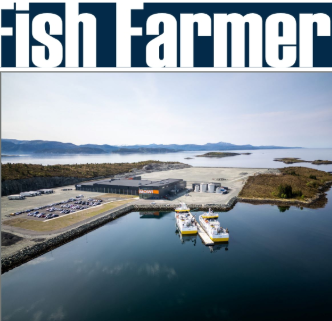
Mowi is facing the prospect of a double salmon disease blow at two of its sites in Norway
Infectious salmon anaemia (ISA) has been detected at a site in Frøya municipality in Trondelag, and bacterial kidney disease (BKD) is suspected at a company facility in Hitra municipality.
On the ISA issue, Mowi’s suspicions were raised earlier this month, and then confirmed following positive analysis results from samples taken at the site.
The Norwegian Food Safety Authority confirmed the ISA diagnosis on last week based on analysis results from the Veterinary Institute.
Author: Vince McDonagh / Fish Farmer | Read the full article here
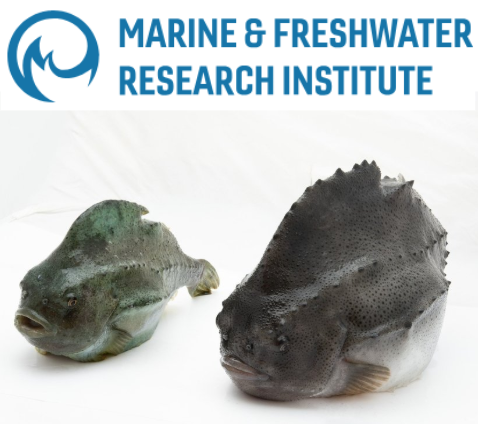
A new recommendation from the Marine and Freshwater Research Institute (MFRI) calls for a cautious increase in lumpfish catches. For the 2025/2026 fishing year, the institute advises that the catch of female lumpfish should not exceed 2,932 tonnes, marking a 6% increase compared to the previous year.
The guidance is based primarily on biomass data from the March 2026 demersal fish stock survey, alongside results from 2025. While the 2026 biomass index showed improvement over 2025, it remains low in historical terms and significantly below the long-term average. Notably, the 2025 index was the second lowest recorded since 1985.
Photo: Svanhildur Egilsdóttir / MFRI -->
Due to year-to-year fluctuations and measurement uncertainty, MFRI applies a weighted system in its assessment, giving 70% weight to the current year and 30% to the previous year. Based on this approach, the institute recommends an initial catch limit of 973 tonnes for the 2026/2027 fishing year.
Seafood New Zealand is calling for a balanced, evidence-driven discussion following the release of the Fisheries Amendment Bill last week.
Chief executive Lisa Futschek said public debate must rely on accurate information, warning that “selective soundbites” risk misleading the public. Concerns have recently focused on proposals to remove minimum size rules, with some claiming the changes lacked consultation.
However, Seafood New Zealand says the measures stem from system updates introduced in 2022 and have undergone multiple consultation rounds, including in 2025.
The organisation highlighted that under the proposed rules, commercial fishers will be required to pay for catching smaller fish—something not previously mandated. This aims to reduce waste and discourage the capture of undersized fish, which also have limited market demand.
According to Seafood New Zealand, New Zealand already operates one of the world’s most sustainable fisheries systems. The amendments, it says, are intended to improve efficiency and clarity while maintaining strict limits, monitoring, and accountability.
Futschek added that protecting a healthy ocean should remain central to the national conversation.
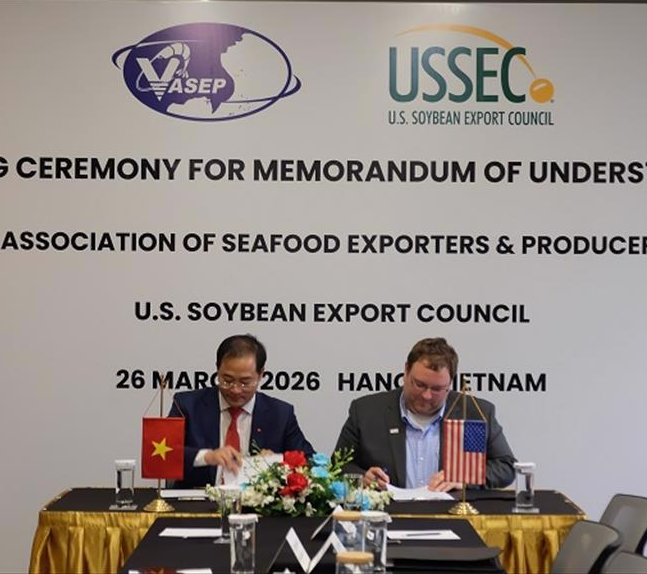
HANOI — The Vietnam Association of Seafood Processing and Export and the U.S. Soybean Export Council signed a Memorandum of Understanding (MOU) to advance sustainable aquaculture development and boost the global competitiveness of Vietnamese seafood.
The ceremony gathered key representatives including Nguyen Hoai Nam (VASEP General Secretary), Le Hang (Deputy General Secretary, VASEP), Lukas Manomaitis (USSEC Director of Aquaculture Technology for East Asia), Justin Sherlock (ASA Director), and Ralph Bean (Agricultural Counsellor), alongside officials from the U.S. Soybean Association and Foreign Agricultural Service.
The agreement targets improved aquaculture quality and sustainability, support for international certifications such as ASC, BAP, and GlobalG.A.P, and wider use of U.S. soybeans in aquafeed production. It also aims to strengthen trade connections and enhance value across the seafood supply chain, marking a new phase of bilateral cooperation.
With five vessels over five days, a survey will be conducted north of the 44° South parallel to determine whether the illex squid population is ready for full fleet harvesting.
If results are positive, authorities could bring forward the season opening, with early signs pointing to a strong campaign for the bonaerense–northern Patagonian stock.
The Consejo Federal Pesquero, in its Act 6, addressed inquiries from the jigging sector about advancing the northern season. To respond, it consulted the INIDEP, whose Cephalopod Program had initially deemed a survey unnecessary. However, following a drop in southern yields, the Institute confirmed that the critical threshold had been reached and recommended proceeding.
The survey was immediately approved, and five vessels were selected to carry it out. If the size of the resource proves adequate, the fishery could be opened and the season begin as early as April 1. Ensuring responsible management will be key to sustaining the resource and advancing toward international certification.
For the second consecutive year, PacificBlu has obtained Zero Waste certification from the international certification body SCS Global Services, after achieving a 98.32% recovery rate for the waste generated at its plants during 2024.
This result represents significant progress compared to the previous year, when the company reached 95.53%, demonstrating continuous improvement in waste management and the implementation of practices related to the circular economy.
The recovery rate was achieved through various management methods, such as recycling, composting, and the reincorporation of waste as raw material in new production processes.





 INDONESIA
 WORLDWIDE
.png) Fuel has ceased to be a contextual factor and has become the variable that most directly influences tuna fishing operations. This is the central idea of ??the analysis by Francisco Blaha, who warns that, in a scenario of sharply rising energy costs, diesel and fuel oil not only erode profit margins but also modify routes, fishing decisions, effort allocation, and even the viability of entire segments of the value chain. Market data reinforces this argument. In Singapore, a benchmark for bunker fuel in Asia and a barometer of the western and central Pacific
Fuel has ceased to be a contextual factor and has become the variable that most directly influences tuna fishing operations. This is the central idea of ??the analysis by Francisco Blaha, who warns that, in a scenario of sharply rising energy costs, diesel and fuel oil not only erode profit margins but also modify routes, fishing decisions, effort allocation, and even the viability of entire segments of the value chain. Market data reinforces this argument. In Singapore, a benchmark for bunker fuel in Asia and a barometer of the western and central Pacific SPAIN
SPAIN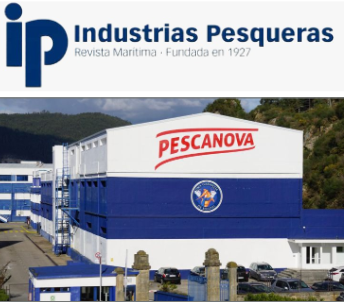 The
The  CHILE
CHILE Blumar
 Ultra-low-density producer pioneers new aquaculture standard
 NORWAY
 Mowi
Mowi  ICELAND
 The guidance is based primarily on biomass data from the March 2026 demersal fish stock survey, alongside results from 2025. While the 2026 biomass index showed improvement over 2025, it remains low in historical terms and significantly below the long-term average. Notably, the 2025 index was the second lowest recorded since 1985.
 NEW ZEALAND
 Chief executive Lisa Futschek said public debate must rely on accurate information, warning that “selective soundbites” risk misleading the public. Concerns have recently focused on proposals to remove minimum size rules, with some claiming the changes lacked consultation.
 VIET NAM
 The ceremony gathered key representatives including Nguyen Hoai Nam (VASEP General Secretary), Le Hang (Deputy General Secretary, VASEP), Lukas Manomaitis (USSEC Director of Aquaculture Technology for East Asia), Justin Sherlock (ASA Director), and Ralph Bean (Agricultural Counsellor), alongside officials from the
  ARGENTINA
.png) If results are positive, authorities could bring forward the season opening, with early signs pointing to a strong campaign for the bonaerense–northern Patagonian stock.
If results are positive, authorities could bring forward the season opening, with early signs pointing to a strong campaign for the bonaerense–northern Patagonian stock.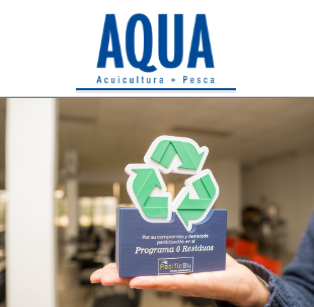 For the second consecutive year,