If you would like to send us an article, contact Margaret Stacey
Cofaco uses ultra-modern technology, which keeps the product's nutritional value.
The Tradition of a National Flavour
(PORTUGAL, 8/10/2015)
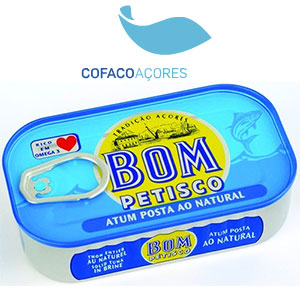
The canned tuna market represents Cofaco Açores' core-business. Cofaco's mission is to satisfy the needs and desires of its clients and consumers through the development of its human and technological resources, thus reassuring its position in the Portuguese market as a reference brand and developing its international presence.
The passion for the sea has always been a symbol and a feature of the Portuguese people. The conserved fish industry began over a century ago thanks to this passion for the sea.
Cofaco is the proprietor of well-known brands that are present in different markets.
This tradition remotes to the late 19th century when, in Vila Real de Santo António, men went out to sea and brought fish to be conserved and consumed later on, mainly during the most harsh and rigorous winter seasons.
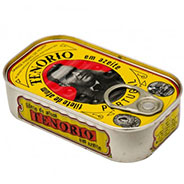
Tenoriois Cofaco's flagshipbrand.
After the Second World War, this practice was officially incremented as an industry. Canned tuna and canned sardine is now common food in the Portuguese diet.
Cofaco was created in Algarve in 1961 and its head office was in Vila Real de Santo António. The tuna fish is rare in the Algarve, so Cofaco fishes in the Azores where the tuna passes in its migration routes.
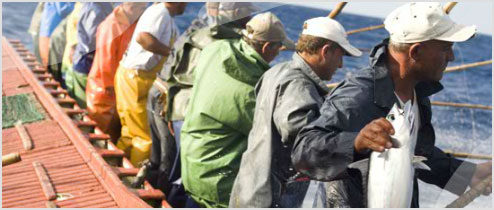
Fishermen of these Portuguese islands, half way between Europe and the US, use the Pole and Line method to catch tuna. The surveillance of Cofaco's fisheries is also assured by The Azores Fishery Observation Program since 1998, POPA. Observers monitor bycatch (only 0,4%) and compliance with environmental regulations, and also provide awareness for the fishermen and collect valuable data on dolphins, sharks, turtles, whales, marine birds and the tuna stock itself.
Cofaco's tuna is line caught on the coast of the Azores Islands. In these islands traditional and craft fishing are predominant, such as the use of a pole and line, causing the least environmental impact possible and giving origin to great potential products in terms of quality.
Cofaco Açores' tuna is Dolphin Safe, a certification awarded by Earth Island Institute, this certification guarantees that the fishery does not capture or harm dolphins. Cofaco's tuna is Friend of the Sea certified, ensuring that the fish come form a sustainable fishery, and is captured in a responsible way in areas that are not over exploited, causing the least environmental impact possible. This certificate was awarded in 2001.
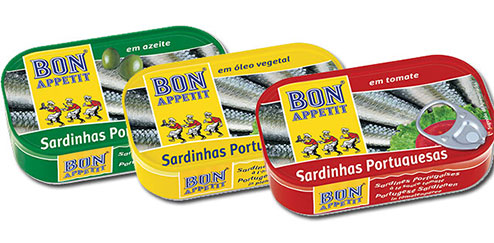
Cofaco has selected the best sardines presenting the wonderful flavour and taste of fresh sardines, in a variety of delicious sauces.
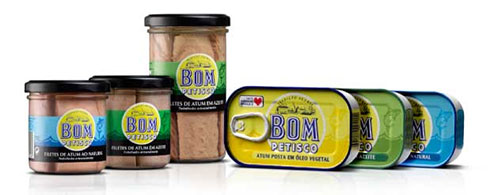
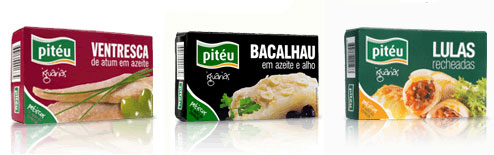
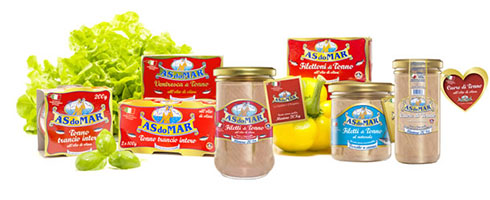
Cofaco is the proprietor of well-known brands that are present in the Portuguese and international markets. For the Portuguese market Cofaco offers tuna, sardines, anchovies and other fish specialities including squid, octopus and mussels. For the international market the company manufactures a range of premium products under the As do Mar brand; standard products under the Bon brand and, other products under the Santamaria brand.
Cofaco offers the most complete and diversified range of products for those who appreciate delicacies.
Cofaco uses ultra-modern technology, which keeps the product's nutritional value and guarantees great bacteriological security. In Cofaco Açores, the production control system is considered to be one of the most demanding ones in the world, the canning process follows more than forty European directives that rule the process from the boat to the point of sale. The aluminium used in Cofaco Açores' cans is 100% recyclable, the most recycled package material in Europe.
The best tuna is selected, from the boat to the finish product; Cofaco blends traditional fishing methods with the most recent production technologies, fulfilling the most demanding quality criteria s accomplishing an exceptional product.
About Cofaco Açores
Cofaco Açores is a Portuguese canned fish company, headquartered in Lisbon with industrial facilities in the Azores.
Cofaco was created 1961 in the Algarve. Currently, Cofaco's fishes in the islands of Pico, (Madalena do Pico), and S. Miguel (Rabo de Peixe).





 (PORTUGAL, 8/10/2015)

 Print
Print