|
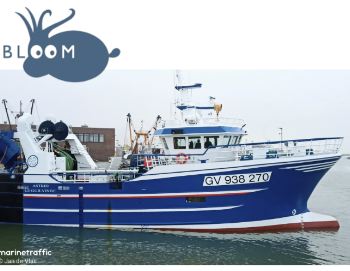
Photo: Bloom/MarineTraffic
'The Great Trawl Case': BLOOM Sues French State to End Marine Destruction
 (FRANCE, 7/14/2025)
Responding to ongoing marine ecosystem degradation and political inaction, the NGO BLOOM has launched legal action against the French government. The lawsuit aims to halt the ecological damage caused by bottom trawling in metropolitan waters, a practice BLOOM asserts is illegal and sustained by massive public subsidies.
PARIS – Amidst the escalating destruction of marine ecosystems and perceived political inertia — recently underscored by the failure of the third UN Ocean Conference (UNOC3), hosted in Nice from June 9 to 13 — the non-governmental organization BLOOM is holding the French government accountable.
On Wednesday, July 9, 2025, BLOOM submitted a formal legal notice to the French State, demanding immediate action to stop the ecological damage caused by the degradation of metropolitan waters and marine biodiversity. This deterioration, according to the NGO, is "largely attributable to bottom trawling, a fishing technique that is both destructive to the environment and harmful to small-scale fisheries, and which can only continue to exist thanks to massive public subsidies."
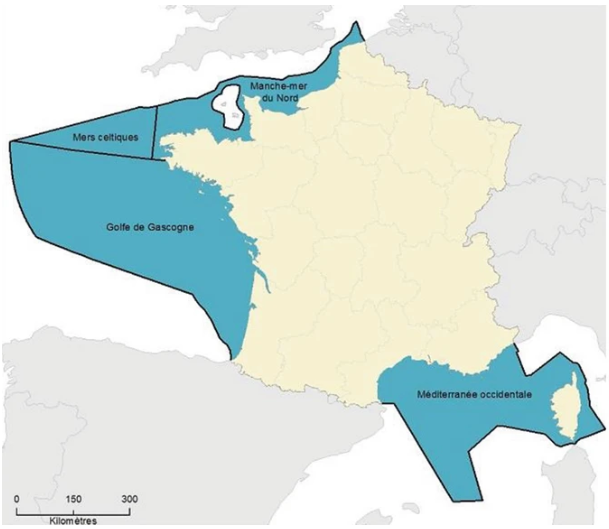
Ocean and Coastal Zone in France
There is a "long-established and unambiguous scientific consensus" on the role of bottom trawling in degrading marine ecosystems. Therefore, its continued use is incompatible with both European and national legal frameworks designed to protect marine environments.
To put an end to the ecological damage caused by the degradation of metropolitan waters and marine biodiversity, BLOOM has adopted a groundbreaking, comprehensive legal approach. This analysis addresses the harms caused by bottom trawling across all four French maritime zones and references all applicable regulations.
Grounds for Legal Action
BLOOM's legal action is based on numerous scientific assessments and legal obligations, including:
-
Ecosystem Protection Goals: Mandates from the EU's Common Fisheries Policy (CFP).
-
Marine Strategy Framework Directive (MSFD): This directive required that good environmental status (GES) of marine ecosystems be achieved or maintained by 2020, supported by scientific assessments of ecosystem health.
-
Review of Natura 2000 Areas: A full analysis of these areas affected by bottom trawling, where the impact of fishing activities must, in principle, be subject to fishing risk assessments (FRA).
-
Regulations Governing the Three-Nautical-Mile Coastal Zone: Where bottom trawling is theoretically banned, but "still widely practiced through exemptions."
-
Mediterranean-Specific Regulations: Where bottom trawling should be prohibited in all marine protected areas designated for the conservation of vulnerable ecosystems such as Posidonia seagrass, maërl beds, and corals.
BLOOM has identified "numerous failures" on the part of France, including failure to achieve GES, failure to apply FRA in Natura 2000 areas, excessive bottom trawling within the three-nautical-mile zone, and non-compliance with trawling bans in Mediterranean protected areas. According to the NGO, current bottom trawling practices prevent France from fulfilling its environmental commitments.
.png)
BLOOM’s formal legal notice, a necessary step before judicial proceedings, demands that the French government take concrete action to remedy and halt the ecological damage occurring in French metropolitan waters, in accordance with current law. If the State fails to act, BLOOM will refer the matter to the administrative courts.
"The deception and irresponsibility of political leaders regarding today’s environmental and social challenges must end. It is time to enact meaningful change to stop the destruction of life—and the people who depend on it—both on land and at sea," BLOOM concluded in its statement.
Source: Bloom
Notes: (1) In legal terms, ecological damage refers to a significant adverse impact on ecosystem elements or functions, or on the collective benefits humans derive from the environment. (2) Regulation (EU) No 1380/2013 of the European Parliament and of the Council of 11 December 2013 on the Common Fisheries Policy. (3) Directive 2008/56/EC of 17 June 2008 establishing a framework for community action in the field of marine environmental policy (Marine Strategy Framework Directive).
editorial@seafood.media
www.seafood.media
Information of the company:
|







 Print
Print