Welcome   Sponsored By
Subscribe | Register | Advertise | Newsletter | About us | Contact us
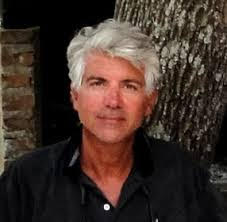
Steve Dolinsky
If the James Beard Awards recognize the best of the food industry then Steve Dolinsky is certainly the nation's premier TV and radio food broadcaster. Since 1995, he's won 12 Beard Awards for his TV and radio work. Currently, he is the Food Reporter for ABC 7 - Chicago. Every Wednesday and Friday at 11 a.m., he introduces his two-minute "Hungry Hound" segments live, covering a range of topics. He also appears on the station's 10 p.m. news every Friday night. In 2007, Steve launched "The Hungry Hound Radio Show," which aired every Saturday at 5 p.m. CST. The lively, one-hour show on WCKG (105.9 FM) had live guests each week from the food and wine world, and also took listeners' calls on a wide range of subjects. From 1997 - 2007, Steve filed reports for WBEZ-FM's "848" program. As the Chicago outlet for National Public Radio, Steve's reports on WBEZ mirrored the style and scope of the stories heard on NPR. Steve has also written about restaurants, chefs and the Chicago-area food scene for The Chicago Reader, Citysearch.com, Chef Magazine and CS Magazine. In 2002, Steve started Culinary Communications, a food industry-focused media training company that works with chefs and other food and beverage professionals outside of Chicago, teaching them how to prepare for and handle all kinds of media exposure. From 1995-2003, Dolinsky was Executive Producer and Host of "Good Eating." The weekly, half-hour show aired on CLTV (Chicagoland TV), the 24-hour cable newschannel owned by The Tribune Company.


A learning experience: My final debrief from the 2010 Seafood Summit
Wednesday, February 10, 2010

Now I see why Target pulled the plug on farmed-raised salmon. It's not that all of the salmon raised in open net pens is bad - although there has been evidence here showing that there are plenty of issues with farm-raised fish. It's the fact that fisheries like those in Chile have been decimated over the past decade, as more and more salmon are succumbing to a pair of diseases, in essence, wiping out the farm-raised population and forcing the Norwegian multi-nationals to move their nets further South, toward Patagonia.

The Chilean salmon industry was a darling at one time. It grew exponentially, and like our mortgage-backed security problem, there was little oversight, high demand, and plenty of people willing to overlook problems as long as the money rolled in and the jobs were plentiful. According to one Chilean official, business has since dropped by 50%, and one of the main reasons is an incurable disease called Infectious Salmon Anemia, or ISA. It seems that the Chilean farm-raised salmon were particularly susceptible to this disease, as well as something called "sea lice," which would attack the farm-raised salmon. Chemicals can treat sea lice, but some fish are now becoming immune to it.

"We have our problems, we have issues we're trying to solve," said Peter Arnesen, a representative from Marine Harvest, a Norwegian company profiled in a startling documentary shown here called "Farmed Salmon Exposed," which shows the effects of farm-raising salmon in the pristine waters of Chile. Arnesen says his company actually reported the ISA problem three years ago, and has since taken an active role in trying to address the problem.

Like other farm-raised operations, the problems are always the same: live fish (typically anchovies and other smaller creatures) must be caught and ground-up into fishmeal to feed the salmon. If chemicals or fish oils are added, that waste winds up wreaking havoc on the sea floor below the net pens; another problem arises when the surrounding wild population gets too close to the farm-raised fish, giving sea lice and ISA a chance to spread among the greater population.

So now I'm thinking, o.k. so wild fish is probably the best way to go, at least when it comes to buying a sustainably-raised product. But then someone shoves a flyer in my hands, telling me that the wild sockeye salmon from Canada's Fraser River has been endangered for years, and that the Marine Stewardship Council (MSC) - the primary 3rd party certification for wild-caught fish in the world - is planning to certify the fishery there as sustainable anyway. Why are these activists speaking out? Because just this past summer, only a million of the predicted 10 million sockeye made their way back up river to spawn. It was the third year in a row of record low returns.

You can see where this is headed. At almost every turn here - in hallways and meeting rooms and lecterns - this vocal, passionate group of business, science and environmental leaders are raising their concerns, sharing their experience and trying to win over support for their side of the story. On one hand, the Sustainability Expert at the Shedd Aquarium tells me the "Right Bite" program (along with the Monterey Bay Aquarium guide) is the perfect tool for consumers, telling them which species are endangered and which are not. The next minute, John Connelly from the National Fisheries Institute is saying he doesn't like rating cards because they lack transparency on how decisions are made, and claims there is a total lack of review and rebuttal.

Connelly told a large group here that 75% of U.S. fish products come from just 6 species. The largest are shrimp, salmon and tilapia (all of them farmed and imported). So the next question becomes traceability and transparency.

How do you know where your fish is coming from?

As consumers continue to ask questions of their fishmongers and waiters, the industry is slowly moving toward greater transparency. One of the catchphrases I heard was Trapia - Traceable tilapia. Some distributors are now doing DNA tracking as they focus on an "egg to plate" approach. Considering zander is often substituted for walleye, and Falkland Island Toothfish is often referred to as Chilean Sea Bass, you can see why some advocates would like to know exactly where their fish is coming from.

One of the really interesting speakers was Tim Wilson, who runs a company called Historic Futures. His business specializes in tracing products to their source. Ever wonder where that diamond pendant at Wal-Mart came from? They can trace it back every step of the chain, to a company that does the diamond mining in Africa.

"Improved transparency generates brand trust and loyalty," said Wilson. "There is a level of cynicism today; most consumers don't believe what they're told, especially if it means it's going to cost more."

Then I bumped into Mark Palicki, a former seafood buyer for Shaw's Crab House, and the current Vice President of Marketing at Fortune Fish, a local distributor.

"Our buyers work closely with the fisherman, " he said. "We travel, visit the farms, or use guides like the Monterey Bay Aquarium, NOAA (National Oceanic and Atmospheric Administration) is another good source. We pull from everything we can find to figure it out. We don't tell people what not to eat. We celebrate who is doing a good job and market and promote those things," said Palicki.

I'm still not convinced farm-raised salmon is all that good for the environment. What I have learned here is that we, as consumers - and food professionals - need to be diligent and continue asking questions about the sources of our food. If we keep asking the right questions, drilling down to the source, hopefully the industry will begin to take a harder look at what it's doing. Who knew that shopping for fish could be so political?

Source: blogs.vocalo.org


 Email Print


Andres Loubet Jambert
Chairman and Co-Founder of FIS

Andres Loubet-Jambert
6/6/2026
The Illex Squid and the 200-Mile Myopia: Toward a Holistic and Sovereign Approach in the South Atlantic

Read article
   
Andres Loubet-Jambert
12/24/2025
Tierra del Fuego Salmon Could Not Escape the Law of Polarity

Read article
   
Andres Loubet-Jambert
8/16/2025
Fishing dependency, oil option, and dialogue with Argentina

Read article
   
Andres P. Arbeletche
5/4/2025
Chubut's Secretary of Fisheries, Andrés Pedro Arbeletche, Offers His Responses in This Opinion Column

Read article
   
Bruce Hearn
10/15/2024
Seafood New Zealand: 'Fisheries And Aquaculture – So Much In Common'

Read article
   
Andres Loubet-Jambert
1/8/2024
Opinion with proposal | Argentine Crisis and the 'Time to Contribute'

Read article
   
ITF International Transport Workers' Federation
2/25/2023
Overfishing in the Southwest Atlantic is a threat to local fishermen and the ecosystem

Read article
   
Dr. Cesar Augusto Lerena
11/15/2022
The foreign occupies and exploits the Southwest Atlantic

Read article
   
Dr. Eduardo Pucci
8/4/2021
Marine Protected Areas on the High Seas

Read article
   
Ian Urbina
5/27/2021
China's aggressive fishing in the world depredates the oceans globally

Read article


Lenguaje
FEATURED EVENTS
  
TOP STORIES
Opinion Article | The Illex Squid and the 200-Mile Myopia: Toward a Holistic and Sovereign Approach in the South Atlantic
Argentina In recent days, the debate over the management of the Illex argentinus squid fishery has flared up again following official announcements to add 18 new vessels to the national jigger fleet. The justif...
Global Surimi Market Faces Severe Supply Deficit as B-Season Prices Surge Past $4/kg
Worldwide Early Procurement Shifts and Lower-than-Expected Raw Material Processing Trigger Aggressive Competition in Asian Distribution Channels The international market for whitefish paste is experiencing an ...
Norwegian Crabs Face Declines While Coldwater Prawn Hits Historic Record
Norway The Norwegian Seafood Council (Norges sjømatråd) has presented its export balance for May 2026, revealing a mixed performance across the shellfish sector. While king crab and snow crab ex...
Historical Norwegian Crash: Minimum Quotas and Raw Material Shortages Hit Cod
Norway Low catch availability drives wild cod and clipfish to multi-decade lows, while farmed product gains unprecedented ground. The Norwegian Seafood Council (Norges Sjømatråd) has revealed a...
 

Umios Corporation  (formerly Maruha Nichiro Corporation)
Nichirei Corporation - Headquarters
Pesquera El Golfo S.A.
Ventisqueros - Productos del Mar Ventisqueros S.A
Wärtsilä Corporation - Wartsila Group Headquarters
ITOCHU Corporation - Headquarters
BAADER - Nordischer Maschinenbau Rud. Baader GmbH+Co.KG (Head Office)
Inmarsat plc - Global Headquarters
Marks & Spencer
Tesco PLC (Supermarket) - Headquarters
Sea Harvest Corporation (PTY) Ltd. - Group Headquarters
I&J - Irvin & Johnson Holding Company (Pty) Ltd.
AquaChile S.A. - Group Headquarters
Pesquera San Jose S.A.
Nutreco N.V. - Head Office
CNFC China National Fisheries Corporation - Group Headquarters
W. van der Zwan & Zn. B.V.
SMMI - Sunderland Marine Mutual Insurance Co., Ltd. - Headquarters
Icicle Seafoods, Inc
Starkist Seafood Co. - Headquearters
Trident Seafoods Corp.
American Seafoods Group LLC - Head Office
Marel - Group Headquarters
SalMar ASA - Group Headquarters
Sajo Industries Co., Ltd
Hansung Enterprise Co.,Ltd.
BIM - Irish Sea Fisheries Board (An Bord Iascaigh Mhara)
CEFAS - Centre for Environment, Fisheries & Aquaculture Science
COPEINCA ASA - Corporacion Pesquera Inca S.A.C.
Chun Cheng Fishery Enterprise Pte Ltd.
VASEP - Vietnam Association of Seafood Exporters & Producers
Gomes da Costa
Furuno Electric Co., Ltd. (Headquarters)
NISSUI - Nippon Suisan Kaisha, Ltd. - Group Headquarters
FAO - Food and Agriculture Organization - Fisheries and Aquaculture Department (Headquarter)
Hagoromo Foods Co., Ltd.
Koden Electronics Co., Ltd. (Headquarters)
A.P. Møller - Maersk A/S - Headquarters
BVQI - Bureau Veritas Quality International (Head Office)
UPS - United Parcel Service, Inc. - Headquarters
Brim ehf (formerly HB Grandi Ltd) - Headquarters
Hamburg Süd Group - (Headquearters)
Armadora Pereira S.A. - Grupo Pereira Headquarters
Costa Meeresspezialitäten GmbH & Co. KG
NOAA - National Oceanic and Atmospheric Administration (Headquarters)
Mowi ASA (formerly Marine Harvest ASA) - Headquarters
Marubeni Europe Plc -UK-
Findus Ltd
Icom Inc. (Headquarter)
WWF Centroamerica
Oceana Group Limited
The David and Lucile Packard Foundation
Ajinomoto Co., Inc. - Headquarters
Friosur S.A. - Headquarters
Cargill, Incorporated - Global Headquarters
Benihana Inc.
Leardini Pescados Ltda
CJ Corporation  - Group Headquarters
Greenpeace International - The Netherlands | Headquarters
David Suzuki Foundation
Fisheries and Oceans Canada -Communications Branch-
Mitsui & Co.,Ltd - Headquarters
NOREBO Group (former Ocean Trawlers Group)
Natori Co., Ltd.
Carrefour Supermarket - Headquarters
FedEx Corporation - Headquarters
Cooke Aquaculture Inc. - Group Headquarters
AKBM - Aker BioMarine ASA
Seafood Choices Alliance -Headquarter-
Austevoll Seafood ASA
Walmart | Wal-Mart Stores, Inc. (Supermarket) - Headquarters
New Japan Radio Co.Ltd (JRC) -Head Office-
Gulfstream JSC
Marine Stewardship Council - MSC Worldwide Headquarters
Royal Dutch Shell plc (Headquarter)
Genki Sushi Co.,Ltd
Iceland Pelagic ehf
AXA Assistance Argentina S.A.
Caterpillar Inc. - Headquarters
Tiger Brands Limited
SeaChoice
National Geographic Society
AmazonFresh, LLC - AmazonFresh

Copyright 1995 - 2026 Seafood Media Group Ltd.| All Rights Reserved.   DISCLAIMER