Welcome   Sponsored By
Subscribe | Register | Advertise | Newsletter | About us | Contact us
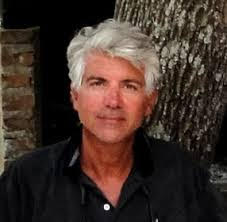
Peter Shelton
Peter Shelton is a senior research scientist with the Canadian Department of Fisheries and Oceans, based in St John’s Newfoundland, specializing in fish population dynamics and stock assessments. He has 32 years experience in federal government, first in South Africa and for the last 20 years in Canada, carrying out analyses and providing advice in support of sustainable fisheries management across a wide range of species from anchovy to seals. He has a Ph.D. from the University of Cape Town and is author of more than 70 primary publications in peer reviewed scientific journals and a further 130 scientific reports presented to the governments of South Africa and Canada, as well as the Northwest Atlantic Fisheries Organization and the International Council for Exploration of the Sea


Eco-certification of sustainably managed fisheries—Redundancy or synergy?
Friday, September 25, 2009

Societal interest in sustainably managed wild capture fisheries has increased over the last 20 years as a consequence of growing concern regarding the finite limits of the Earth’s ability to feed an increasing human population and recognition that valuable renewable food resources, such as marine fisheries, can be depleted through over-harvesting and inadequate management. Governments and regional fisheries management organizations (RFMOs) are increasingly emphasizing sustainable fisheries management in policy documents, but effective implementation of these policies is often lagging. The United Nations Food and Agriculture Organization reports that 30% of the world’s fisheries are now over-exploited or depleted.

This widespread failure of traditional governance structures to successfully implement sustainable fisheries management policy has created a niche for environmental non governmental organizations (ENGOs) and other non-profit groups to play a significant role. They have become increasingly active in drawing public attention to unsustainable fishing practices around the world and bringing pressure to bear on governments and RFMOs to implement more conservation-minded and sustainable measures. More recently these campaigns have broadened to include a focus on producers, retailers and consumers through processes such as eco-certification, eco-labeling, endorsement and ranking of sustainably managed fisheries and products derived from these fisheries.

These various groups have similar goals, but the mechanisms for achieving sustainable fisheries are very different. Governments and RFMOs work through a political process to achieve the best compromise between exploitation and conservation whereas the ENGOs and non-profit groups directly targets human values with regard to what is good and what is not through social conscience and the market place.

The potential exists for redundancy, with society paying twice, once for a belt and once for braces, to ensure that the sustainability trousers stay up. If governments and RFMOs are already meeting sustainability objectives, why do harvesters and processors have to pay the potentially high cost (eventually passed onto the consumer/taxpayer) of getting a second seal of approval to convince the resource owners (civil public) that all is well with their property and that the leaseholders (fishing industry) are living up to their legal obligations?

A publicly funded system for sustainable fisheries, governed by legislation, regulations, conventions and codes of conduct may seem to be the most logical approach to managing public property for long-term public good. The reasonable role for ENGOs and non-profit groups would be the traditional one of carping and criticism to keep the traditional fisheries management bodies honest, rather than trying to do the job themselves. However, the poor performance and lack of transparency of some governments and RFMOs has resulted in deterioration in public trust and created the opportunity for synergy. 

Eco-certification has the potential to improve industry market share and revenue streams making sustainable management more profitable in the short-term.  It is also raising the awareness of society to the need to consider more carefully what fish we eat and whether or not it comes from a sustainably managed fishery.  Eco-certification may therefore create a more positive climate for governments and RFMOs to move forward on the implementation of stalled sustainable fisheries management policies.

There is no question that sustainable fisheries are of paramount importance to all concerned. Both traditional forms of fisheries governance and the new and emerging process of eco-certification, eco-labeling and ranking can facilitate the achievement of sustainable fisheries. The question is, do we need both? For the time being we have to argue “yes”. Traditional measures have been slow to deal with the enormity of the problem of overfishing. There is redundancy in ENGOs and non-profit groups second guessing governments and RFMOs on sustainability, but it is the synergistic side of the equation that needs to be emphasised. Yes, we need belt and braces to keep the sustainability trousers up, at least for the time being.


 Email Print


Andres Loubet Jambert
Chairman and Co-Founder of FIS

Andres Loubet-Jambert
6/11/2026
Echoes of the Sea of Japan: How Geopolitical Standoff and '200-Mile Myopia' Threaten the Argentine Illex Squid

Read article
   
Andres Loubet-Jambert
6/6/2026
The Illex Squid and the 200-Mile Myopia: Toward a Holistic and Sovereign Approach in the South Atlantic

Read article
   
Andres Loubet-Jambert
12/24/2025
Tierra del Fuego Salmon Could Not Escape the Law of Polarity

Read article
   
Andres Loubet-Jambert
8/16/2025
Fishing dependency, oil option, and dialogue with Argentina

Read article
   
Andres P. Arbeletche
5/4/2025
Chubut's Secretary of Fisheries, Andrés Pedro Arbeletche, Offers His Responses in This Opinion Column

Read article
   
Bruce Hearn
10/15/2024
Seafood New Zealand: 'Fisheries And Aquaculture – So Much In Common'

Read article
   
Andres Loubet-Jambert
1/8/2024
Opinion with proposal | Argentine Crisis and the 'Time to Contribute'

Read article
   
ITF International Transport Workers' Federation
2/25/2023
Overfishing in the Southwest Atlantic is a threat to local fishermen and the ecosystem

Read article
   
Dr. Cesar Augusto Lerena
11/15/2022
The foreign occupies and exploits the Southwest Atlantic

Read article
   
Dr. Eduardo Pucci
8/4/2021
Marine Protected Areas on the High Seas

Read article


Lenguaje
FEATURED EVENTS
  
TOP STORIES
Opinion Article | Echoes of the Sea of Japan: How Geopolitical Standoff and '200-Mile Myopia' Threaten the Argentine Illex Squid
Argentina The ghost of the Northwest Pacific is actively haunting the Southwest Atlantic. Decades ago, the Sea of Japan harbored one of the most prolific cephalopod fisheries on the planet; today, the populatio...
Excellent Start to the Shrimp Season with High Yields in Authorized and Surveyed Areas
Argentina The freezer trawler fleet operates with an average catch of 3,000 kilograms per hour, while a low presence of fresh-fish vessels is reported due to economic crisis and labor conflicts. The start of t...
Macroeconomic Uncertainty in the US Seafood Market
United States The dual impact of disputed refunds under IEEPA and new tariff threats under Section 301 creates a commercial stalemate. The regulatory and fiscal framework applied to seafood imports in the United S...
Japan Market Tuna Statistics and Household Spending: Domestic Consumption Recedes Amid Upsurge in Restaurant Spending
Japan Imports of fresh and frozen seafood products increase in value during the first four months of 2026, while family purchases show a downward trend TOKYO — The latest data issued by the Ministry ...
 

Umios Corporation  (formerly Maruha Nichiro Corporation)
Nichirei Corporation - Headquarters
Pesquera El Golfo S.A.
Ventisqueros - Productos del Mar Ventisqueros S.A
Wärtsilä Corporation - Wartsila Group Headquarters
ITOCHU Corporation - Headquarters
BAADER - Nordischer Maschinenbau Rud. Baader GmbH+Co.KG (Head Office)
Inmarsat plc - Global Headquarters
Marks & Spencer
Tesco PLC (Supermarket) - Headquarters
Sea Harvest Corporation (PTY) Ltd. - Group Headquarters
I&J - Irvin & Johnson Holding Company (Pty) Ltd.
AquaChile S.A. - Group Headquarters
Pesquera San Jose S.A.
Nutreco N.V. - Head Office
CNFC China National Fisheries Corporation - Group Headquarters
W. van der Zwan & Zn. B.V.
SMMI - Sunderland Marine Mutual Insurance Co., Ltd. - Headquarters
Icicle Seafoods, Inc
Starkist Seafood Co. - Headquearters
Trident Seafoods Corp.
American Seafoods Group LLC - Head Office
Marel - Group Headquarters
SalMar ASA - Group Headquarters
Sajo Industries Co., Ltd
Hansung Enterprise Co.,Ltd.
BIM - Irish Sea Fisheries Board (An Bord Iascaigh Mhara)
CEFAS - Centre for Environment, Fisheries & Aquaculture Science
COPEINCA ASA - Corporacion Pesquera Inca S.A.C.
Chun Cheng Fishery Enterprise Pte Ltd.
VASEP - Vietnam Association of Seafood Exporters & Producers
Gomes da Costa
Furuno Electric Co., Ltd. (Headquarters)
NISSUI - Nippon Suisan Kaisha, Ltd. - Group Headquarters
FAO - Food and Agriculture Organization - Fisheries and Aquaculture Department (Headquarter)
Hagoromo Foods Co., Ltd.
Koden Electronics Co., Ltd. (Headquarters)
A.P. Møller - Maersk A/S - Headquarters
BVQI - Bureau Veritas Quality International (Head Office)
UPS - United Parcel Service, Inc. - Headquarters
Brim ehf (formerly HB Grandi Ltd) - Headquarters
Hamburg Süd Group - (Headquearters)
Armadora Pereira S.A. - Grupo Pereira Headquarters
Costa Meeresspezialitäten GmbH & Co. KG
NOAA - National Oceanic and Atmospheric Administration (Headquarters)
Mowi ASA (formerly Marine Harvest ASA) - Headquarters
Marubeni Europe Plc -UK-
Findus Ltd
Icom Inc. (Headquarter)
WWF Centroamerica
Oceana Group Limited
The David and Lucile Packard Foundation
Ajinomoto Co., Inc. - Headquarters
Friosur S.A. - Headquarters
Cargill, Incorporated - Global Headquarters
Benihana Inc.
Leardini Pescados Ltda
CJ Corporation  - Group Headquarters
Greenpeace International - The Netherlands | Headquarters
David Suzuki Foundation
Fisheries and Oceans Canada -Communications Branch-
Mitsui & Co.,Ltd - Headquarters
NOREBO Group (former Ocean Trawlers Group)
Natori Co., Ltd.
Carrefour Supermarket - Headquarters
FedEx Corporation - Headquarters
Cooke Aquaculture Inc. - Group Headquarters
AKBM - Aker BioMarine ASA
Seafood Choices Alliance -Headquarter-
Austevoll Seafood ASA
Walmart | Wal-Mart Stores, Inc. (Supermarket) - Headquarters
New Japan Radio Co.Ltd (JRC) -Head Office-
Gulfstream JSC
Marine Stewardship Council - MSC Worldwide Headquarters
Royal Dutch Shell plc (Headquarter)
Genki Sushi Co.,Ltd
Iceland Pelagic ehf
AXA Assistance Argentina S.A.
Caterpillar Inc. - Headquarters
Tiger Brands Limited
SeaChoice
National Geographic Society
AmazonFresh, LLC - AmazonFresh

Copyright 1995 - 2026 Seafood Media Group Ltd.| All Rights Reserved.   DISCLAIMER