|
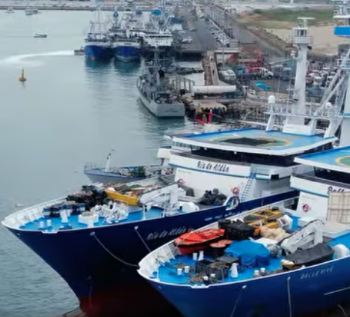
Tuna purse seiner vessels at the port of Manta
Ecuadorian Tuna Catch Drops 30.8%, Impacting Supply for the Processing Industry
 ECUADOR
Friday, September 04, 2026, 00:10 (GMT + 9)
Despite the drop in fishing volumes in the first half of 2026, the country maintains its leadership in the Eastern Pacific Ocean with 35.2% of the regional total.
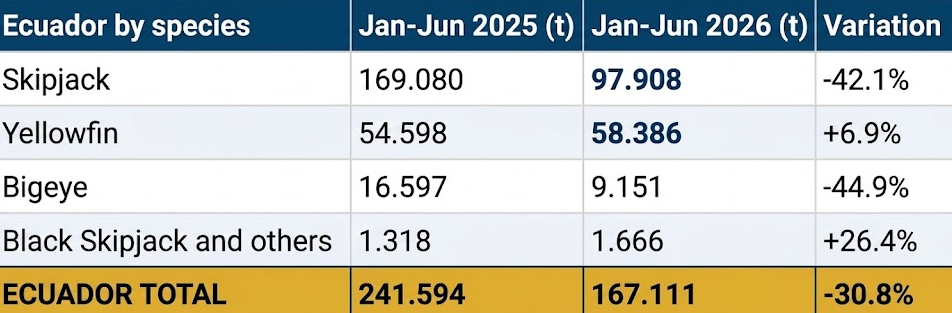
GUAYAQUIL — Tuna catches in Ecuador reached 167,111 tonnes between January 1 and June 28, 2026, representing a 30.8% decline compared to the 241,594 tonnes reported in the same period of 2025. The data was released by the Inter-American Tropical Tuna Commission (IATTC) for the Eastern Pacific Ocean.
.png)
Port of Manta
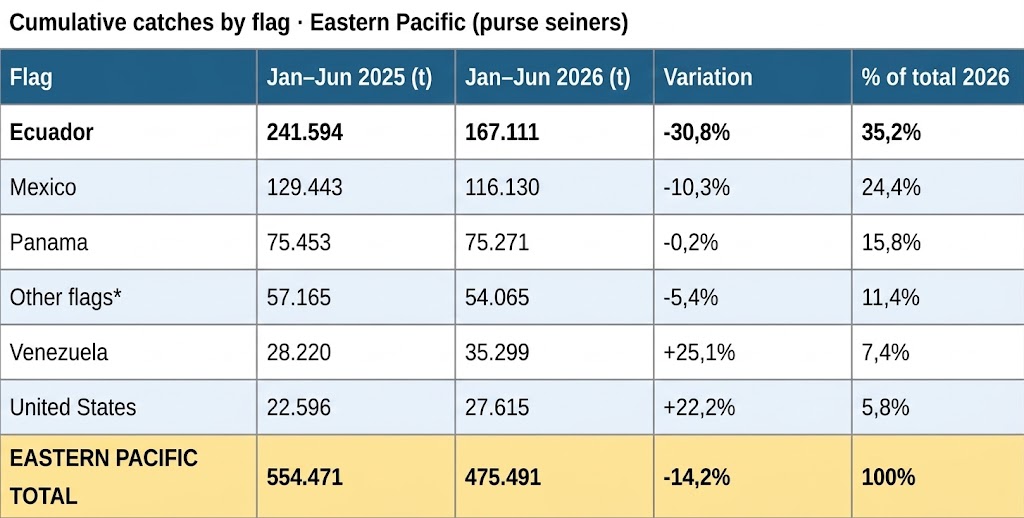
Despite this setback, Ecuador remains in first place in the regional fishery, accounting for 35.2% of the total volume caught during the semester. It is followed by Mexico, with 116,130 tonnes (24.4%), and Panama, with 75,271 tonnes (15.8%).
Performance by Species
The IATTC technical report highlights that the reduction in volume for Ecuadorian operations is mainly driven by a decline in two specific species:
-
Skipjack (Katsuwonus pelamis): Registered a 42.1% drop, falling from 169,080 tonnes in 2025 to 97,908 tonnes in 2026. This species represents the key raw material for the canning and processing industry.
-
Bigeye (Thunnus obesus): Showed a sharp decline of 44.9%, dropping from 16,597 tonnes to 9,151 tonnes.
-
Yellowfin (Thunnus albacares): Showed an opposite trend with a 6.9% increase, rising from 54,598 tonnes to 58,386 tonnes.
Regional Context and Performance
The reduction observed in the Ecuadorian sector occurs within a broader drop across the Eastern Pacific fishery. The cumulative volume for the six main flag states in the region fell by 14.2%, from 554,471 tonnes to 475,491 tonnes. However, Ecuador's contraction rate (-30.8%) was more than double the regional average.
The performance of other fleets operating in the area showed mixed results:
-
Venezuela and the United States: Recorded increases of 25.1% and 22.2%, respectively.
-
Mexico: Showed a decrease of 10.3%.
-
Other flags (group comprising Colombia, Spain, Nicaragua, El Salvador, and Guatemala): Reported a combined reduction of 5.4%.
Impact on the Processing Chain
The lower availability of skipjack (Katsuwonus pelamis) impacts the supply flow to processing plants located in Manta and other port hubs in the country. A lower supply of raw material exerts upward pressure on operational costs for the local processing industry, even as yellowfin (Thunnus albacares) catches experienced a slight increase during the same period.
🇯🇵 日本語 (Japanese Version) | AIによる自動翻訳
エクアドルのカツオ・マグロ漁獲量が30.8%減少、缶詰加工業の原料供給に影響
2026年上半期の漁獲量は減少したものの、同国は東太平洋において地域全体の35.2%を占め、首位の座を維持。
グアヤキル — 東太平洋を管轄する全米熱帯マグロ委員会(IATTC)の報告によると、2026年1月1日から6月28日までのエクアドルのマグロ類漁獲量は167,111トンにとどまり、2025年同期の241,594トンと比較して30.8%減となりました。
この減少にもかかわらず、エクアドルは今期地域全体の総漁獲量の35.2%を占め、同地域における主要漁業国としての首位を維持しています。次いでメキシコが116,130トン(24.4%)、パナマが75,271トン(15.8%)となっています。
魚種別の動向
IATTCのテクニカルレポートによると、エクアドル船団の漁獲量減少は主に以下の2魚種の減少に起因しています:
-
カツオ(Katsuwonus pelamis): 缶詰・加工水産品産業の主力原料である本魚種は、2025年の169,080トンから2026年には97,908トンへと42.1%の大幅減となりました。
-
メバチ(Thunnus obesus): 16,597トンから9,151トンへ44.9%の急減を記録しました。
-
キハダ(Thunnus albacares): 54,598トンから58,386トンへ6.9%増加し、対照的な動きを見せました。
地域的文脈と他国船団の動向
エクアドルにおける減少は、東太平洋全体の漁獲量低下の傾向と一致しています。同地域の主要6旗国の合計累積漁獲量は554,471トンから475,491トンへと14.2%減少しました。しかし、エクアドルの減少率(-30.8%)は地域平均の2倍以上となりました。
同海域で操業するその他の船団の動向は以下の通りです:
水産加工チェーンへの影響
カツオ(Katsuwonus pelamis)の供給量減少は、マンタをはじめとする国内主要港に位置する加工工場の操業ペースに直接影響を与えています。同期間中にキハダ(Thunnus albacares)の漁獲量がわずかに増加したものの、主力原料の不足は現地加工産業の製造コストを押し上げる要因となっています。
🇨🇳 中文 (Simplified Chinese Version) | 由人工智能自动翻译
厄瓜多尔金枪鱼捕捞量下降30.8%,影响罐头加工业原料供应
尽管2026年上半年捕捞量有所下降,该国仍以占该地区总捕捞量35.2%的份额保持其在东太平洋的领先地位。
瓜亚基尔 — 根据美洲热带金枪鱼委员会(IATTC)针对东太平洋发布的数据,2026年1月1日至6月28日期间,厄瓜多尔的金枪鱼捕捞量达到167,111吨,与2025年同期的241,594吨相比下降了30.8%。
尽管出现下滑,厄瓜多尔仍保持该地区渔业的首位,占本半年度该地区总捕捞量的35.2%。紧随其后的是墨西哥,捕捞量为116,130吨(占24.4%),以及巴拿马,捕捞量为75,271吨(占15.8%)。
按鱼种划分的捕捞表现
IATTC的技术报告指出,厄瓜多尔捕捞量的减少主要是由两个具体鱼种的产出下滑所致:
-
鲣鱼(Katsuwonus pelamis): 作为罐头和加工水产品产业的核心原料,其捕捞量从2025年的169,080吨下降到2026年的97,908吨,降幅达42.1%。
-
大目金枪鱼(Thunnus obesus): 出现大幅回落,从16,597吨减少至9,151吨,降幅为44.9%。
-
黄鳍金枪鱼(Thunnus albacares): 呈现相反趋势,从54,598吨增加到58,386吨,增长了6.9%。
区域背景与各国表现
厄瓜多尔捕捞量的下降发生在东太平洋整个渔业捕捞量总体减少的大背景下。该地区六个主要旗国的总累计捕捞量从554,471吨下降到475,491吨,降幅为14.2%。然而,厄瓜多尔的下降幅度(-30.8%)是该地区平均降幅的两倍以上。
在该海域作业的其他船队的表现参差不齐:
对加工产业链的影响
鲣鱼(Katsuwonus pelamis)供应量的减少直接影响了位于曼塔及该国其他港口枢纽的加工厂的原料补给节奏。尽管同期的黄鳍金枪鱼(Thunnus albacares)捕捞量略有增加,但主要原料可用性的下降仍推高了当地加工业的生产成本。
editorial@seafood.media
www.seafood.media
|
|





 Print