Welcome   Sponsored By
Subscribe | Register | Advertise | Newsletter | About us | Contact us
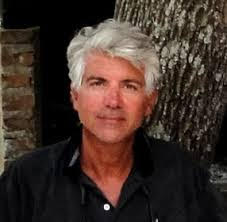
Richard Telofski

Richard Telofski is a competitive strategy analyst at The Kahuna Institute, Inc., Princeton, New Jersey USA, where he specializes in critical and independent analysis of anti-corporate activists and how they impact business.

He is the author of four books, the latest of which is Insidious Competition – The Battle for Meaning and the Corporate Image, dealing in-depth with the business effects of NGOs and activist groups.

Previous to his work at the Institute, Richard was a professor of economics and marketing at Monmouth University and at Georgian Court University.

He holds a B.A. in Communications & Sociology from Rutgers University, and a M.B.A. in Marketing from Rider University.

Richard blogs regularly about the impact of activism upon business. His work can be read at www.Telofski.com.


Of Greenpeace, Democracy, and Fishing
Saturday, November 12, 2011

There can't be much doubt that Greenpeace has become a significant factor in the seafood industry over the past few years. Positioning themselves as fishing experts, this environmental non-governmental organization (eNGO) leads protest actions against various seafood brands, acting on an agenda which they present as being in the public interest. But who selected this agenda? Is their agenda one created from a wide base of opinion or is it one that is created by a selected few? Before we answer these questions, let's first take a look at some examples of this agenda's effects on the seafood industry.

Every few years, Greenpeace produces its Tinned Tuna League Table. The most recent table was published in January 2011 rating various tuna brands on their level of sustainability fishing practices. These ratings are based on criteria that Greenpeace selects itself. Greenpeace publicizes the table widely, eliciting a variety of comment from brands, retailers, and consumers alike. The publication of this table is supplemented by the release of other “responsible” seafood ranking guides, among them the 2010 guide published in Japan. These guides are based on Greenpeace selected criteria, as well.

In addition to the tables and guides, Greenpeace launches “corporate campaigns,” selecting a targeted seafood brand they consider not sustainable enough. Recently the industry saw the Sealord brand in Auckland NZ categorized as “bad tuna;” positioned by Greenpeace as one that is caught “unsustainably.” Of course, the definition of “sustainable” is not set in stone and Greenpeace leveraged that fuzzy definition when they festooned some of Auckland's streets with anti-Sealord banners and posters, generally making a mess. Sealord responded by saying that the eNGO's campaign was “misleading in the extreme” while the local business association characterized the poster plastering as “tantamount to vandalism.”

Choosing to concentrate on demagoguery rather than constructive action, Greenpeace has been cited as not wanting to work with industry groups toward the improvement of tuna fishing techniques, and has been shown to choose to spend its time promoting “erroneous stories”, demanding an end to industrial fleet fishing and the Mediterranean bluefin fishery, as well as issuing self-defined studies condemning various national seafood retailers and industries.

There are many other examples, but the point is made that this eNGO has significant influence within and on the seafood industry. Now back to the central question: how widely selected is the agenda that Greenpeace enacts?

Greenpeace is operated as a semi-loose federation of national/regional offices. Greenpeace International oversees each office's activities with particular attention to approving campaigns such as the those described above. Each office is governed by a board of directors which is elected by a Greenpeace membership of volunteers, staff, or other activists who have shown commitment to the causes of this eNGO. It is the representatives from the individual offices (presumably the members of the board of directors from each national office) who elect the Greenpeace International board of directors. This sounds alright so far, I suppose. But let's dig a little deeper. Who elects the members of the national offices? The process for these elections, using the Greenpeace United States office as an example, is described below and is thought to be the similar for each national Greenpeace office.

Greenpeace US is a very tightly held organization, with a voting process that is just as tightly and closely controlled by a limited and carefully selected number of people. Let me explain.

In Section 2.1a of Greenpeace US's Bylaws, “Selection of Voting Members,” it states:

"The Voting Members of this corporation (referred to in these Bylaws as the “members”) shall consist of those individuals designated by the Board of Directors."

In Section 2.1, the Bylaws further state that Voting Members will be selected based on their work experience with Greenpeace US, or other Greenpeace divisions, or on their leadership in the environmental movement, and that the total number of members will be between 40 and 100.

So far what we see is an extremely narrow voting base chosen by the Board of Directors. And now, here's where the tight control comes in.

Section 2.3 of those same bylaws, “Rights of Voting Members,” says in sub-section A that Voting Members, among other “rights and privileges,” have:

"The right to vote for member-elected directors of the corporation (Greenpeace US) as provided in these Bylaws." (Parentheses mine.)

So, here we see that the Board of Directors select the Voting Members and the Voting Members select, at least some of, the directors on the board. And these narrowly-based opinions and less-than-democratic influences pass through to the international organization and the campaigns it approves.

Such a governance policy, lacking in wide democracy, provides for little openness, not much accountability, and sets up a situation where transparency can become nonexistent. All of this makes for a situation where democracy is forgotten and the power of this worldwide eNGO is concentrated in the hands of a relatively small number of people.

We can see now that the answer to the questions posed in my first paragraph is that relatively few people create an agenda that has a disproportional effect on the seafood industry. Because of this absence of wide democracy in Greenpeace's agenda, an agenda that consequently becomes stoked on fear and sensationalism, the rest of us lack certainty that their ideas are representative of the general population.

Now, as so often happens, the answer to one question breeds yet another question.

The question now is not whether the Greenpeace agenda is determined by a selected few.

The question now is what do we do with this information?

I'll leave the answer to that one to ALL of you.


 Email Print


Andres Loubet Jambert
Chairman and Co-Founder of FIS

Andres Loubet-Jambert
6/6/2026
The Illex Squid and the 200-Mile Myopia: Toward a Holistic and Sovereign Approach in the South Atlantic

Read article
   
Andres Loubet-Jambert
12/24/2025
Tierra del Fuego Salmon Could Not Escape the Law of Polarity

Read article
   
Andres Loubet-Jambert
8/16/2025
Fishing dependency, oil option, and dialogue with Argentina

Read article
   
Andres P. Arbeletche
5/4/2025
Chubut's Secretary of Fisheries, Andrés Pedro Arbeletche, Offers His Responses in This Opinion Column

Read article
   
Bruce Hearn
10/15/2024
Seafood New Zealand: 'Fisheries And Aquaculture – So Much In Common'

Read article
   
Andres Loubet-Jambert
1/8/2024
Opinion with proposal | Argentine Crisis and the 'Time to Contribute'

Read article
   
ITF International Transport Workers' Federation
2/25/2023
Overfishing in the Southwest Atlantic is a threat to local fishermen and the ecosystem

Read article
   
Dr. Cesar Augusto Lerena
11/15/2022
The foreign occupies and exploits the Southwest Atlantic

Read article
   
Dr. Eduardo Pucci
8/4/2021
Marine Protected Areas on the High Seas

Read article
   
Ian Urbina
5/27/2021
China's aggressive fishing in the world depredates the oceans globally

Read article


Lenguaje
FEATURED EVENTS
  
TOP STORIES
Shifting Global Seafood Markets Spark Fluctuations in Norwegian Pelagic Exports
Norway Falling herring export values collide with record-low mackerel volumes despite a surge in American and Asian demand Herring: Prices are falling for many products Norway exported 7,123 tons of ...
Opinion Article | The Illex Squid and the 200-Mile Myopia: Toward a Holistic and Sovereign Approach in the South Atlantic
Argentina In recent days, the debate over the management of the Illex argentinus squid fishery has flared up again following official announcements to add 18 new vessels to the national jigger fleet. The justif...
Alimerka chain opens the north albacore season at the Rula de Avilés with a symbolic bid of 35,521 euros
Spain The traditional inaugural auction of the season aims to capture the interest of the media and the general public before stabilizing real market prices AVILÉS.- The 2026 north albacore (bo...
Russian Fishing Fleet Logs Two Million Tons in Mid-Year Operational Update
Russia Fed. Federal Agency for Fisheries releases five-month catch data across independent maritime basins as fleets pace toward annual targets MOSCOW — The Federal Agency for Fisheries (Rosrybolovstvo) ha...
 

Umios Corporation  (formerly Maruha Nichiro Corporation)
Nichirei Corporation - Headquarters
Pesquera El Golfo S.A.
Ventisqueros - Productos del Mar Ventisqueros S.A
Wärtsilä Corporation - Wartsila Group Headquarters
ITOCHU Corporation - Headquarters
BAADER - Nordischer Maschinenbau Rud. Baader GmbH+Co.KG (Head Office)
Inmarsat plc - Global Headquarters
Marks & Spencer
Tesco PLC (Supermarket) - Headquarters
Sea Harvest Corporation (PTY) Ltd. - Group Headquarters
I&J - Irvin & Johnson Holding Company (Pty) Ltd.
AquaChile S.A. - Group Headquarters
Pesquera San Jose S.A.
Nutreco N.V. - Head Office
CNFC China National Fisheries Corporation - Group Headquarters
W. van der Zwan & Zn. B.V.
SMMI - Sunderland Marine Mutual Insurance Co., Ltd. - Headquarters
Icicle Seafoods, Inc
Starkist Seafood Co. - Headquearters
Trident Seafoods Corp.
American Seafoods Group LLC - Head Office
Marel - Group Headquarters
SalMar ASA - Group Headquarters
Sajo Industries Co., Ltd
Hansung Enterprise Co.,Ltd.
BIM - Irish Sea Fisheries Board (An Bord Iascaigh Mhara)
CEFAS - Centre for Environment, Fisheries & Aquaculture Science
COPEINCA ASA - Corporacion Pesquera Inca S.A.C.
Chun Cheng Fishery Enterprise Pte Ltd.
VASEP - Vietnam Association of Seafood Exporters & Producers
Gomes da Costa
Furuno Electric Co., Ltd. (Headquarters)
NISSUI - Nippon Suisan Kaisha, Ltd. - Group Headquarters
FAO - Food and Agriculture Organization - Fisheries and Aquaculture Department (Headquarter)
Hagoromo Foods Co., Ltd.
Koden Electronics Co., Ltd. (Headquarters)
A.P. Møller - Maersk A/S - Headquarters
BVQI - Bureau Veritas Quality International (Head Office)
UPS - United Parcel Service, Inc. - Headquarters
Brim ehf (formerly HB Grandi Ltd) - Headquarters
Hamburg Süd Group - (Headquearters)
Armadora Pereira S.A. - Grupo Pereira Headquarters
Costa Meeresspezialitäten GmbH & Co. KG
NOAA - National Oceanic and Atmospheric Administration (Headquarters)
Mowi ASA (formerly Marine Harvest ASA) - Headquarters
Marubeni Europe Plc -UK-
Findus Ltd
Icom Inc. (Headquarter)
WWF Centroamerica
Oceana Group Limited
The David and Lucile Packard Foundation
Ajinomoto Co., Inc. - Headquarters
Friosur S.A. - Headquarters
Cargill, Incorporated - Global Headquarters
Benihana Inc.
Leardini Pescados Ltda
CJ Corporation  - Group Headquarters
Greenpeace International - The Netherlands | Headquarters
David Suzuki Foundation
Fisheries and Oceans Canada -Communications Branch-
Mitsui & Co.,Ltd - Headquarters
NOREBO Group (former Ocean Trawlers Group)
Natori Co., Ltd.
Carrefour Supermarket - Headquarters
FedEx Corporation - Headquarters
Cooke Aquaculture Inc. - Group Headquarters
AKBM - Aker BioMarine ASA
Seafood Choices Alliance -Headquarter-
Austevoll Seafood ASA
Walmart | Wal-Mart Stores, Inc. (Supermarket) - Headquarters
New Japan Radio Co.Ltd (JRC) -Head Office-
Gulfstream JSC
Marine Stewardship Council - MSC Worldwide Headquarters
Royal Dutch Shell plc (Headquarter)
Genki Sushi Co.,Ltd
Iceland Pelagic ehf
AXA Assistance Argentina S.A.
Caterpillar Inc. - Headquarters
Tiger Brands Limited
SeaChoice
National Geographic Society
AmazonFresh, LLC - AmazonFresh

Copyright 1995 - 2026 Seafood Media Group Ltd.| All Rights Reserved.   DISCLAIMER